


Steam hisses, coffee drips, and your first shot still tastes thin or bitter. A dependable espresso maker can turn that rushed kitchen moment into a richer, more controlled ritual, with fresh crema and a warmer aroma in the cup.
This comparison brings together classic stovetop designs, compact machines, and grinder-equipped setups. If you are weighing the best espresso machines made in italy, keep reading for practical buying guidance before choosing your match.
Key Takeaways
- Prioritize brew pressure and temperature control if you want consistent espresso rather than occasional coffee-shop results.
- Choose a stovetop capacity based on your usual serving size, since moka-pot cup ratings are smaller than standard mugs.
- Look for a built-in grinder with adjustable settings if you want fresher grounds and fewer separate appliances.
- Confirm the milk frother type and wand controls if cappuccinos or lattes matter as much as straight espresso.
- Check the country of manufacture, warranty, dimensions, and electrical requirements instead of assuming an Italian brand was made in Italy.
| Classic Café Control | 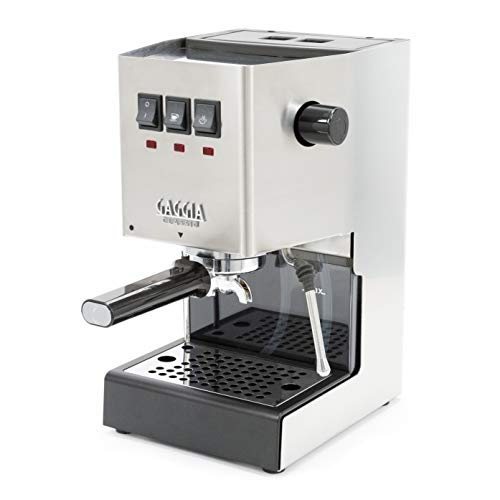 |
Gaggia E24 Espresso Machine | Commercial-style portafilter | Stainless-steel construction | Manual steam wand | View on Amazon | Read Review |
| Stovetop Italian Icon |  |
Bialetti 6-Cup Moka Express | Iconic Italian design | No electricity required | Easy to clean | View on Amazon | Read Review |
| Dark Finish Workhorse |  |
Gaggia Classic Evo Pro | Compact countertop footprint | Commercial-style brewing group | Manual milk control | View on Amazon | Read Review |
| Flexible Milk Frothing |  |
De'Longhi Classic Espresso Machine | Adjustable milk frother | Familiar manual controls | Designed for milk drinks | View on Amazon | Read Review |
| Integrated Grinder Control |  |
Breville Barista Express Grinder | Integrated burr grinder | Manual extraction control | Built-in dosing workflow | View on Amazon | Read Review |
| Small-Space Starter |  |
CASABREWS Compact Espresso Machine | Compact countertop footprint | Included steam wand | Beginner-friendly layout | View on Amazon | Read Review |
| Stainless Bean-to-Cup |  |
Breville Barista Express Stainless | Integrated grinder | Stainless-steel finish | Manual steam control | View on Amazon | Read Review |
| All-In-One Drink Range | 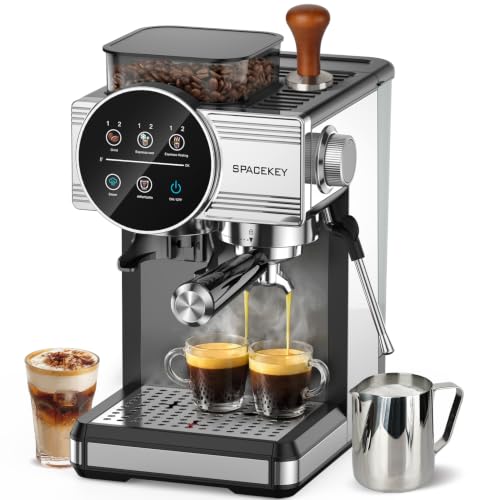 |
Espresso Machine Grinder Frother | Built-in grinder | Cold-brew function | Milk frothing included | View on Amazon | Read Review |
| Industrial Grey Traditionalist |  |
Gaggia Classic Evo Pro | Distinct industrial-grey finish | Commercial-style portafilter | Manual steam wand | View on Amazon | Read Review |
| Colorful Manual Favorite |  |
Gaggia Classic Pro Cherry Red | Eye-catching cherry-red finish | Commercial-style portafilter | Manual brewing control | View on Amazon | Read Review |
More Details on Our Top Picks
-
Gaggia E24 Espresso Machine
The Gaggia E24 suits you if you want traditional espresso control without moving into commercial equipment. Its brushed stainless-steel body, commercial-style portafilter, and manual steam wand give you the tools to refine grind size, dosing, and milk texture.
You get a large water reservoir, a three-way solenoid valve, and a familiar single-boiler layout. The trade-off is a hands-on workflow, including separate brewing and steaming, so it rewards patience more than convenience.
- Brand:Gaggia
- Type:Semi-automatic espresso
- Capacity:2.1-liter reservoir
- Material:Stainless steel
- Power:1370 watts
- Frother:Manual steam wand
- Additional Feature:Three-way solenoid valve
- Additional Feature:58mm portafilter
- Additional Feature:E24 brass group design
-
Bialetti 6-Cup Moka Express
Choose the Moka Express if you prefer simple stovetop brewing over pump-driven espresso. Its six-cup format works well for serving several small coffee portions, while the aluminum body delivers Bialetti’s familiar, classic design.
This is a low-maintenance coffee maker with no electrical parts, grinder, or milk system. It produces strong moka coffee rather than true café espresso, and you must use it on a compatible stovetop.
- Brand:Bialetti
- Type:Stovetop moka pot
- Capacity:6 cups, 270ml
- Material:Aluminum
- Additional Feature:Eight-sided aluminum body
- Additional Feature:Pressure safety valve
- Additional Feature:Stay-cool handle
-
Gaggia Classic Evo Pro
The Classic Evo Pro fits you if you want manual espresso fundamentals in a compact machine with a darker finish. Its metal housing, commercial-style portafilter, and traditional steam wand support a more involved café routine.
A generous reservoir reduces refill frequency, while the three-way solenoid valve helps manage the puck after brewing. Like other single-boiler machines, it requires a pause between pulling shots and steaming milk.
- Brand:Gaggia
- Type:Semi-automatic espresso
- Capacity:2.1-liter reservoir
- Material:Metal housing
- Power:1370 watts
- Frother:Manual steam wand
- Additional Feature:Thunder Black finish
- Additional Feature:Three-way solenoid valve
- Additional Feature:58mm portafilter
-
De'Longhi Classic Espresso Machine
You’ll appreciate this De’Longhi if milk drinks are a regular part of your routine. The adjustable frother gives you more control over foam texture than a basic fixed steam outlet, while the traditional espresso format keeps operation approachable.
Its key advantage is straightforward drink preparation for home users who want cappuccinos and lattes without a built-in grinder. The limitation is that you still need freshly ground coffee and a separate grinder for the best results.
- Brand:De'Longhi
- Type:Semi-automatic espresso
- Frother:Adjustable milk frother
- Additional Feature:Espresso and cappuccino brewing
- Additional Feature:Manual milk steaming
- Additional Feature:Compact countertop design
-
Breville Barista Express Grinder
The Barista Express is a strong fit if you want grinding and brewing in one machine. Its integrated conical burr grinder, adjustable grind settings, and manual steam wand give you meaningful control from whole bean to finished drink.
You also get a built-in dosing workflow, pressure-oriented extraction feedback, and a large water reservoir. That convenience adds size and cleaning duties, and the machine is not Italian-made, so it belongs here as an Italian-style alternative rather than a true Italian-made pick.
- Brand:Breville
- Type:Semi-automatic espresso
- Capacity:2-liter reservoir
- Material:Stainless steel
- Frother:Manual steam wand
- Additional Feature:Adjustable grind settings
- Additional Feature:Integrated conical burr grinder
- Additional Feature:Hot-water outlet
-
CASABREWS Compact Espresso Machine
The CASABREWS makes sense for small kitchens and occasional espresso. Its compact body, steam wand, and pump-based brewing setup cover the essentials without taking over your counter.
A separate grinder is required because this model does not include one. It is also not an Italian-made machine, so consider it a practical compact alternative rather than a direct match for an Italy-focused buying list.
- Brand:CASABREWS
- Type:Compact semi-automatic
- Frother:Steam wand
- Additional Feature:Single and double brewing
- Additional Feature:Removable water tank
- Additional Feature:Stainless-steel accents
-
Breville Barista Express Stainless
Select this stainless Barista Express if you want visible controls and an all-in-one bean workflow. The integrated grinder, dosing controls, and manual steam wand let you adjust the process instead of relying on preset drinks.
Its stainless finish suits modern kitchens and is generally easy to coordinate with other appliances. As with the black-truffle version, the machine is Australian-designed rather than Italian-made, and its larger footprint may challenge narrow counters.
- Brand:Breville
- Type:Semi-automatic espresso
- Capacity:2-liter reservoir
- Material:Stainless steel
- Frother:Manual steam wand
- Additional Feature:Conical burr grinder
- Additional Feature:Adjustable grind size
- Additional Feature:Hot-water dispenser
-
Espresso Machine Grinder Frother
This machine targets you if variety matters more than brand heritage. Its built-in grinder, milk frother, cold-brew function, and listed 20-bar pump cover several drink styles in one appliance.
The broad feature set is convenient for households with mixed preferences, but it can also mean more settings to manage and more parts to clean. The listing does not identify a clear Italian manufacturer, so verify construction, warranty, and service support before buying.
- Type:Multi-function espresso
- Frother:Milk frother
- Additional Feature:Cold-brew preparation
- Additional Feature:Integrated coffee grinder
- Additional Feature:Espresso brewing
-
Gaggia Classic Evo Pro
The Industrial Grey Classic Evo Pro is aimed at you if you want manual café technique with a neutral, understated finish. Its commercial-style brewing hardware and steam wand support both straight espresso and milk-based drinks.
A large reservoir helps during back-to-back preparation, while the traditional controls keep the process transparent. Its single-boiler design means you need to manage the transition from brewing to steaming rather than switching instantly between both tasks.
- Brand:Gaggia
- Type:Semi-automatic espresso
- Capacity:2.1-liter reservoir
- Material:Metal housing
- Power:1370 watts
- Frother:Manual steam wand
- Additional Feature:Three-way solenoid valve
- Additional Feature:58mm portafilter
- Additional Feature:Classic Evo Pro platform
-
Gaggia Classic Pro Cherry Red
The Cherry Red Classic Pro is for you if appearance matters alongside technique. It uses a familiar manual format with a commercial-style portafilter and steam wand, giving you control over espresso preparation and milk texture.
Its bright finish brings personality to the counter, while the roomy reservoir supports several drinks before refilling. You still need a separate grinder, and the single-boiler system requires a short wait between brewing and steaming.
- Brand:Gaggia
- Type:Semi-automatic espresso
- Capacity:1.3-liter reservoir
- Material:Metal housing
- Frother:Manual steam wand
- Additional Feature:Three-way solenoid valve
- Additional Feature:58mm portafilter
- Additional Feature:Traditional steam wand
Frequently Asked Questions
What does “made in Italy” mean for an espresso machine?
“Made in Italy” generally indicates that the machine is assembled in Italy, but the origin of individual parts can vary. Pumps, electronics, heating elements, and other components may come from suppliers in several countries. Check the manufacturer’s country-of-origin statement instead of relying only on the brand’s Italian heritage. Product listings and warranty documents should clarify where the machine is built and serviced.
Are Italian espresso machines worth the higher price?
They can be worth it if you value repairable construction, stable brewing temperatures, and strong steam performance. Many Italian models also offer replaceable commercial-style parts, which can extend their useful life. You may not need to spend thousands for good espresso. A well-matched grinder and fresh coffee often improve the cup more than moving from a midrange machine to a luxury model.
Do I need a separate grinder?
For the best espresso, pair the machine with a burr grinder that offers fine, consistent adjustment. Built-in grinders save counter space, but separate grinders usually give you better control and make upgrades easier. Choose a grinder designed for espresso, not a basic blade grinder or a general-purpose model with limited settings. Your grinder is the dial that determines how much of the machine’s potential reaches the cup.
How long do Italian espresso machines take to heat up?
Heating time depends on the design. Compact thermoblock machines may be ready in one to five minutes, while machines with large boilers or E61 groups can take 15 to 30 minutes to reach full stability. A built-in timer or smart plug can help you warm the machine before breakfast. Do not rush a large boiler machine, since the display may show a ready temperature before the group and portafilter are fully heated.
How do you maintain an Italian espresso machine?
Flush the group after brewing, wipe and purge the steam wand immediately, and empty the drip tray regularly. Backflush with an approved cleaner as directed, and replace the group gasket and screen when they show wear. Use filtered water that matches the manufacturer’s guidance, then descale only when appropriate. Excessive descaling can damage some boilers, so prevention and regular cleaning are safer than waiting for heavy scale buildup.