
When you step into a local cafe, the rhythmic hum of the espresso machine is often the heartbeat of the store. For millions of customers, the specific profile of a Starbucks latte or flat white is a benchmark for quality.
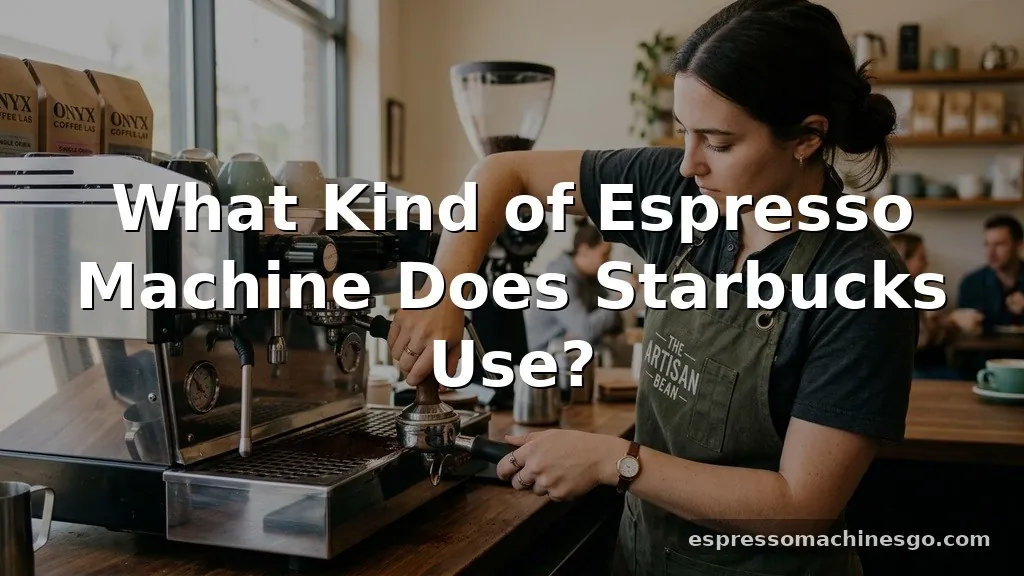
If you have ever wondered what kind of espresso machine does Starbucks use to achieve that signature consistency across thousands of global locations, the answer lies in a specialized partnership with Swiss engineering firm Thermoplan. Unlike the manual portafilter setups found in traditional boutique coffee shops, the company relies on highly sophisticated, automatic espresso systems designed for speed, durability, and standardized flavor profiles.
The Evolution of Starbucks Espresso Technology
For many years, the coffee giant relied on legendary equipment from La Marzocco, a brand synonymous with high-end manual espresso preparation. During that era, baristas had to manually grind beans, tamp the coffee puck, lock the portafilter into the group head, and monitor the extraction time. While this produced a high-quality “third wave” style of espresso, it was labor-intensive and difficult to scale consistently across a massive retail footprint.
As the demand for hot and iced beverages skyrocketed, the need for a more efficient workflow became apparent. This shift led to the transition toward the Mastrena machine series, which revolutionized how the chain handles its daily volume.
The transition to the Mastrena high performance espresso machine marked a move toward total automation. By integrating the grinder directly into the machine, Starbucks ensured that each shot of espresso was dosed, ground, and tamped with robotic precision. This eliminates the variables of human error that can lead to inconsistent brew times or uneven extraction.
Today, the baristas focus more on the assembly of the drinks and the steaming of milk rather than the technical minutiae of pulling a shot. This system allows a single store to serve hundreds of customers per hour without sacrificing the structural integrity of the espresso shot.
Understanding the Mastrena II System
The current workhorse of the brand is the Mastrena II. This machine is a marvel of automatic engineering, designed specifically to meet the high-speed requirements of a busy retail environment. One of the primary advantages of this unit is its compact footprint, which allows baristas to maintain a better line of sight to the customer across the counter.
The machine is designed to be modular, meaning that if one part requires service, the entire unit does not necessarily need to be taken offline. This reliability is critical when a store is processing thousands of transactions daily.
Technically, the machine operates as a “bean-to-cup” system. The beans are stored in hoppers at the top, and the internal grinder processes them on demand for each individual shot. This ensures that the ground coffee is as fresh as possible, minimizing oxidation.
The water temperature and pressure are calibrated to specific parameters set by the corporate office, ensuring that a latte in Seattle tastes identical to one in London. Furthermore, the steam wand is automated to a degree; it can reach specific temperatures, allowing the barista to focus on other tasks while the milk reaches the perfect texture for a cappuccino or latte.
Comparison of Espresso Equipment Technologies
To understand why these machines are unique, it helps to compare the automated approach used by large chains against the manual equipment used in specialty coffee houses. The following table highlights the core functional differences between these approaches.
| Feature | Mastrena (Automated) | Manual Espresso Machine |
|---|---|---|
| Grinding | Integrated, automated dosing | Separate, manual adjustment |
| Tamping | Internal mechanical press | Manual hand-held tamper |
| Extraction | One-touch programmable | Manual monitoring of time/flow |
| Maintenance | Automated cleaning cycles | Manual backflushing required |
Bridging the Gap: Why You Cannot Buy a Mastrena for Home
A common question among coffee enthusiasts is whether they can purchase a Mastrena machine for home use. Unfortunately, these units are not available to the public. They are proprietary pieces of equipment manufactured exclusively for the retail chain through their partnership with Thermoplan.
The machines are not just hardware; they are part of a larger ecosystem of proprietary software, maintenance contracts, and specialized water filtration systems that are not feasible for a residential kitchen. If you are looking to replicate the experience at home, you will need to look for high-end super-automatic espresso maker models from brands like Jura or Gaggia, which offer similar “bean-to-cup” functionality.
When attempting to mimic the flavor profile of these popular drinks at home, the equipment is only half the battle. The flavor of the espresso is heavily influenced by the roast profile of the beans themselves. The company uses a specific dark roast that is designed to cut through the sweetness of syrups and the texture of steamed milk.
Using a high-quality burr grinder and fresh beans will get you closer to the desired taste than any specific machine ever could. You can learn more about the complexities of coffee extraction via the National Coffee Association, which offers detailed insights into the science behind the perfect cup.
Maintaining Consistency Across Thousands of Locations
The hallmark of the machines Starbucks uses is consistency. In a manual setup, if a barista is tired or poorly trained, the quality of the coffee fluctuates. By utilizing the Mastrena, the company effectively removes the “variable” of the human hand from the extraction process.
These machines are programmed with specific “recipes” that dictate the exact amount of water, the grind size, and the pressure applied to the coffee bed. Whether you order a hot Americano or an iced cold brew variant with espresso, the machine ensures that the coffee component remains within a narrow margin of quality.
- Consistency: Automated pressure and temperature control eliminate human error.
- Speed: Integrated grinders and rapid heating elements allow for lightning-fast service.
- Modularity: Parts can be swapped out quickly to minimize downtime during peak hours.
- Data Tracking: Newer models can track shot counts and maintenance needs remotely.
- Ease of Use: Staff can be trained to operate the equipment in a matter of hours.
This level of automation also aids in inventory management. Because the machines are calibrated to use a specific dose of ground coffee per shot, the company can accurately predict how much product they will need across their global network. This level of precision is virtually impossible to achieve with manual equipment, where the amount of coffee used can vary significantly depending on the barista’s technique and the calibration of the external grinder.
Addressing Common Misconceptions
One of the most persistent myths is that the quality of the drink depends solely on the machine. While the espresso machine is a vital tool, it is essentially a delivery system for the quality of the beans and the skill of the barista in texturing milk.
Some people believe that using a high-end espresso maker will automatically result in a drink like Starbucks, but this ignores the importance of the water quality and the freshness of the roast. The water used in these stores is filtered through sophisticated reverse osmosis systems, which removes minerals that might interfere with the flavor of the coffee.
Another misconception is that the frother (or steam wand) on these machines is fully manual. In reality, modern iterations utilize sensors to measure the temperature of the milk and stop the steaming process once the target heat is reached. This allows the barista to multitask, potentially prepping a second drink while the first is steaming.
This “workflow optimization” is what allows the company to move through long lines of customers with such efficiency. While a home barista might enjoy the tactile experience of manual steaming, the commercial environment demands a balance between quality and velocity that only these automated systems can provide.
Frequently Asked Questions
Can I buy the Mastrena machine for my kitchen?
No, the Mastrena series is manufactured exclusively for the retail giant through a private partnership with Thermoplan. These machines are not sold to the general public, and their size, power requirements, and maintenance needs make them unsuitable for a standard residential environment.
Do these machines use real espresso beans?
Yes, the machines use standard whole coffee beans. The “espresso” designation refers to the brewing method—using high pressure to force hot water through finely ground coffee—rather than a specific type of bean. The company selects specific dark roasts to suit this extraction process.
How do baristas steam milk if the machine is automatic?
The machines feature high-powered automated steam wands with temperature sensors. While the barista still holds the pitcher and positions it to create the desired foam, the machine automatically shuts off the steam once the milk reaches the pre-programmed temperature, ensuring consistency across every drink.
Why does the coffee taste different at home?
Consistency in coffee is a result of water filtration, precise grind calibration, and bean freshness. Commercial machines maintain a perfectly stable pressure and temperature that is difficult to replicate at home, and the proprietary roast profile used by the chain is also a major contributing factor.