A larger espresso machine is not automatically the right choice for a small cafe. Counter space, drink volume, cleanup, and milk service can matter just as much as pressure ratings.
This roundup compares the best espresso machines for small cafe setups across compact, steam-driven, pump-powered, and portable designs. Keep reading to see which specifications deserve your attention before you buy.
Key Takeaways
- Prioritize pump pressure and temperature consistency if you expect steady drink orders.
- Choose a larger water reservoir when frequent refills could slow service.
- Check the milk-frothing system if lattes and cappuccinos are central to your menu.
- Match brew capacity to your expected order volume instead of choosing by pressure alone.
- Confirm the machine’s counter footprint, cleaning needs, and power requirements before purchase.
| Small-Batch Starter |  |
KEENSTAR Compact 3.5-Bar Espresso Maker | Compact countertop footprint | Four-cup capacity | Simple espresso setup | View on Amazon | Read Review |
| Entry-Level Milk Drinks |  |
CASABREWS Compact Espresso Machine | Built-in steam wand | Compact footprint | Supports milk drinks | View on Amazon | Read Review |
| Flexible Batch Capacity |  |
IMUSA Electric Espresso Maker | Selectable cup capacity | Cool-touch handle | Simple electric operation | View on Amazon | Read Review |
| Compact Cappuccino Station |  |
XIXUBX 3.5-Bar Espresso Machine | Integrated steam wand | Compact design | Supports cappuccino drinks | View on Amazon | Read Review |
| Digital Café Control | 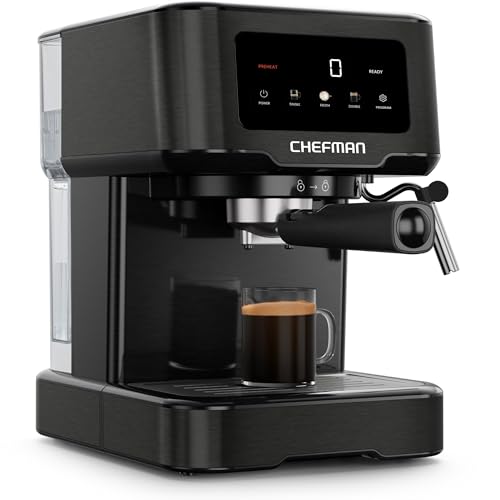 |
Chefman CraftBrew 15-Bar Espresso Maker | Digital control interface | Large removable reservoir | Includes steam wand | View on Amazon | Read Review |
| Multi-Drink Touchscreen |  |
SECPOEDR 20-Bar Touchscreen Espresso Maker | Touchscreen controls | Cold-brew function | Built-in milk frother | View on Amazon | Read Review |
| Mobile Coffee Service |  |
Portable Rechargeable Espresso Maker | Rechargeable operation | Ground and capsule support | Travel-friendly design | View on Amazon | Read Review |
| Compact Milk Beverage Maker |  |
AERCANA 20-Bar Espresso Machine | Removable water tank | Integrated milk frother | Compact stainless design | View on Amazon | Read Review |
| Four-Shot Steam Brewing |  |
Mr. Coffee Four-Shot Steam Maker | Four-shot capacity | Includes frothing pitcher | Supports milk beverages | View on Amazon | Read Review |
| Capsule Service Specialist |  |
CHULUX Bafè-Pro 20-Bar Capsule Maker | 20-bar pump | Capsule-focused workflow | Compact design | View on Amazon | Read Review |
More Details on Our Top Picks
-
KEENSTAR Compact 3.5-Bar Espresso Maker
The KEENSTAR fits a small café that needs a compact espresso station for occasional drinks, staff use, or low-volume service. Its 3.5-bar pressure, 800-watt heating system, and four-cup capacity suit simple espresso preparation without taking over the counter.
The modest pressure favors straightforward coffee rather than café-style extraction, and the limited capacity may slow service during rushes. Still, you get a space-conscious design and an accessible option for basic espresso drinks.
- Brand:KEENSTAR
- Machine Type:Electric espresso maker
- Pressure:3.5 bar
- Capacity:4 cups
- Brew Format:Ground coffee
- Milk System:Steam wand
- Additional Feature:800-watt heating system
- Additional Feature:Compact countertop design
- Additional Feature:Preheat function
-
CASABREWS Compact Espresso Machine
Choose the CASABREWS if your menu centers on espresso with steamed milk, including cappuccinos and lattes. The integrated steam wand gives you more drink flexibility than a basic espresso-only appliance, while its compact body suits tight café counters.
Its main limitation is the lack of published capacity and pressure details in the supplied information. Treat it as a light-duty machine unless the manufacturer confirms that it can handle your expected service volume.
- Brand:CASABREWS
- Machine Type:Compact espresso machine
- Brew Format:Espresso
- Milk System:Steam wand
- Additional Feature:Milk frothing capability
- Additional Feature:Space-saving form factor
- Additional Feature:Designed for cappuccinos
-
IMUSA Electric Espresso Maker
The IMUSA is a practical choice if you want two capacity options in one compact brewer. Its six-cup setting can help with small batches, while the three-cup option is better suited to quieter periods or limited counter service.
A cool-touch handle improves day-to-day handling, but the supplied details do not identify pressure, heating power, or a milk system. That makes this a better fit for simple espresso service than for a café built around textured milk drinks.
- Brand:IMUSA
- Machine Type:Electric espresso maker
- Capacity:3 or 6 cups
- Brew Format:Espresso
- Additional Feature:Black finish
- Additional Feature:Two serving sizes
- Additional Feature:Cool-touch handle
-
XIXUBX 3.5-Bar Espresso Machine
For a small café with a modest drinks list, the XIXUBX offers a small-footprint setup for espresso and steamed milk. Its 3.5-bar system and included steam wand cover the basics for cappuccinos and similar drinks.
This pressure level is more suited to casual, low-volume service than demanding espresso production. The available information also leaves capacity and control details unclear, so you should confirm workflow needs before making it your primary machine.
- Brand:XIXUBX
- Machine Type:Compact espresso machine
- Pressure:3.5 bar
- Brew Format:Espresso
- Milk System:Steam wand
- Additional Feature:Cappuccino preparation
- Additional Feature:Small counter footprint
- Additional Feature:Basic espresso brewing
-
Chefman CraftBrew 15-Bar Espresso Maker
The Chefman CraftBrew is the strongest match here for a café seeking higher pressure capability and a more organized daily workflow. Its digital controls, 1.5-liter removable reservoir, and steam wand make it suitable for a broader latte and cappuccino menu.
The compact format remains useful, but this is still a consumer-oriented machine rather than a high-volume commercial unit. During busy service, the single-group design and reservoir-based setup may require more frequent attention.
- Brand:Chefman
- Machine Type:Pump espresso maker
- Pressure:15 bar
- Capacity:1.5 liters
- Brew Format:Espresso
- Milk System:Steam wand
- Additional Feature:Stainless black finish
- Additional Feature:Removable water reservoir
- Additional Feature:Latte and cappuccino support
-
SECPOEDR 20-Bar Touchscreen Espresso Maker
The SECPOEDR targets operators who want one appliance for several drink styles. A touchscreen interface, 20-bar pump, milk frother, and cold-brew function give it broader menu potential than a basic espresso maker.
That extra functionality can be useful in a compact café, though the supplied details do not reveal reservoir size or service capacity. For consistent rush-hour output, confirm how quickly it can switch between espresso, milk drinks, and cold brew.
- Brand:SECPOEDR
- Machine Type:Multi-function espresso machine
- Pressure:20 bar
- Brew Format:Espresso and cold brew
- Milk System:Milk frother
- Additional Feature:Touchscreen operation
- Additional Feature:Cold-brew preparation
- Additional Feature:High-pressure pump
-
Portable Rechargeable Espresso Maker
The portable coffee maker is built for off-site service, pop-up counters, catering, and cafés that need a backup brewer. Its rechargeable battery, USB-C charging, and compatibility with both ground coffee and NS-style capsules make it unusually flexible for travel.
Portability comes with a clear trade-off: this is not the right tool for sustained café queues or large drink volumes. It makes the most sense as a mobile or emergency station, not as your main espresso machine.
- Machine Type:Portable espresso maker
- Brew Format:Ground coffee and NS capsules
- Milk System:Not specified
- Additional Feature:USB-C charging
- Additional Feature:Three-in-one compatibility
- Additional Feature:Battery-powered brewing
-
AERCANA 20-Bar Espresso Machine
The AERCANA gives you a 20-bar pump and integrated milk frothing in a compact format suited to small counters, office cafés, and limited menus. Its 34-ounce removable tank should be convenient for refilling and cleaning between service periods.
The tank is smaller than what you would expect from a commercial machine, so frequent drinks may require regular refills. It is best for modest throughput and menus built around espresso, lattes, and cappuccinos.
- Brand:AERCANA
- Machine Type:Compact espresso machine
- Pressure:20 bar
- Capacity:34 ounces
- Brew Format:Espresso
- Milk System:Milk frother
- Additional Feature:Stainless steel finish
- Additional Feature:Cappuccino preparation
- Additional Feature:Latte drink support
-
Mr. Coffee Four-Shot Steam Maker
The Mr. Coffee suits a small café that values batch-style preparation over fast, pump-driven extraction. Its four-shot capacity and included stainless steel frothing pitcher support simple espresso, cappuccino, and latte service from one appliance.
Steam brewing has a different profile from pump espresso, and it may not deliver the same control or crema as higher-pressure machines. It is a sensible pick for low-volume service, but less convincing for an espresso-focused café with demanding drink standards.
- Brand:Mr. Coffee
- Machine Type:Steam espresso maker
- Capacity:4 shots
- Brew Format:Espresso
- Milk System:Steam frother
- Additional Feature:Stainless steel pitcher
- Additional Feature:Cappuccino preparation
- Additional Feature:Latte preparation
-
CHULUX Bafè-Pro 20-Bar Capsule Maker
The CHULUX Bafè-Pro is a strong fit for a capsule-led café menu where speed and consistent portions matter more than manual dosing. Its 20-bar pump and compatibility with Nes-style pods keep the workflow simple for staff with varying experience levels.
The capsule format limits bean choice, dose control, and traditional barista adjustment. It also lacks a listed milk system, so you will need a separate solution for lattes and cappuccinos.
- Brand:CHULUX
- Machine Type:Capsule espresso maker
- Pressure:20 bar
- Brew Format:Nes-style pods
- Additional Feature:Gray finish
- Additional Feature:Pod-based brewing
- Additional Feature:Simple portion control
Frequently Asked Questions
Is a one-group espresso machine enough for a small café?
It can be, if your café serves a modest volume and has a manageable rush. A one-group machine works well for restaurants, bakeries, kiosks, and cafés with fewer than about 100 drinks per day. Choose a two-group model if you expect multiple baristas, frequent milk drinks, or a concentrated morning rush. Extra capacity protects your service speed as sales grow.
Do I need a commercial espresso machine for a café?
Yes. A café needs equipment designed for continuous service, faster recovery, and commercial safety requirements. Home machines often have smaller boilers, lighter components, and warranties that exclude business use. A commercial machine also gives you more consistent steam pressure and easier access to replacement parts. Those benefits matter during every busy service period.
Should I choose a plumbed-in or reservoir machine?
A plumbed-in machine is usually the better choice for steady café traffic because it avoids refilling and supports consistent operation. It requires a water line, drainage plan, and properly sized filtration system. A reservoir model makes sense for a small counter, mobile setup, or location without plumbing. Check its tank capacity and refill schedule carefully, since frequent refills can interrupt service.
Is a dual-boiler machine worth the extra cost?
A dual-boiler machine is worthwhile if you serve many milk drinks or want precise control over brew temperature. Separate boilers let you brew and steam at the same time with less compromise. For a lower-volume café with a simple menu, a heat-exchange model may provide better value. Spend the difference on a strong grinder, water treatment, and preventive maintenance if those needs are not covered.
How much should I spend on an espresso machine for a small café?
Plan on roughly $2,000 to $15,000 or more for the machine, with single-group models at the lower end and higher-capacity dual-group systems near the top. Prices vary with boiler size, automation, construction, and service coverage. Your full espresso setup also needs a commercial grinder, filtration, installation, and supplies. A realistic total equipment budget prevents an expensive machine from being paired with an unsuitable grinder or neglected water system.