Commercial espresso machines once meant bulky café equipment, fixed behind a counter and operated by seasoned staff. Now, the category spans polished multi-group workhorses and compact home systems that bring café-style control to smaller spaces.
That shift makes choosing the best commercial espresso machines less straightforward, especially when grinder design, automation, and service demands vary sharply. The comparison ahead focuses on the specifications that matter most, so keep reading before you commit.
Key Takeaways
- Match the group count to your expected drink volume, since extra groups improve throughput but require more counter space and power.
- Prioritize temperature stability and boiler design over high advertised pump pressure for more consistent espresso.
- Choose semi-automatic controls for hands-on barista work or volumetric dosing for faster, repeatable service.
- Check whether an integrated grinder and milk frother suit your workflow, or whether separate equipment offers better flexibility.
- Confirm the machine’s dimensions, electrical needs, water connection, and service support before buying for a commercial setting.
| Three-Group Workhorse |  |
Professional 3-Group Espresso Machine | Three-group workflow | Commercial café design | Stainless-steel construction | View on Amazon | Read Review |
| All-In-One Starter |  |
EUHOMY Espresso Machine, 20 Bar | Integrated grinder | Built-in milk frother | Home-friendly setup | View on Amazon | Read Review |
| Classic Grinder Setup |  |
Breville Barista Express, Stainless Steel | Integrated burr grinder | Manual shot control | Brushed stainless finish | View on Amazon | Read Review |
| Busy Bar Specialist |  |
Nuova Simonelli Appia Life, 2-Group | Two-group workflow | Automatic shot dosing | Commercial café format | View on Amazon | Read Review |
| Guided Tamping |  |
Breville Barista Express Impress | Assisted tamping | Integrated grinder | Beginner-friendly workflow | View on Amazon | Read Review |
| Multi-Drink Flexibility | 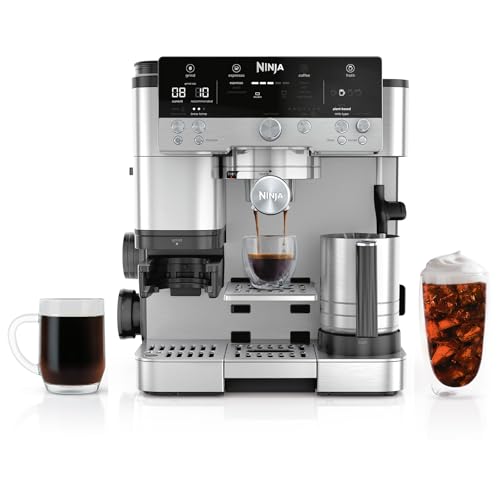 |
Ninja Luxe Café Premier, 3-in-1 | Three beverage styles | Built-in grinder | Broad household appeal | View on Amazon | Read Review |
| Dual-Boiler Control |  |
Rocket Espresso R58, Dual Boiler | Dual-boiler design | PID temperature control | Rotary pump | View on Amazon | Read Review |
| Compact Milk Drinks |  |
Gevi Compact Espresso Machine, 20 Bar | Compact footprint | Built-in steam wand | 20-bar pump | View on Amazon | Read Review |
| Dark Finish Classic |  |
Breville Barista Express, Black Truffle | Integrated burr grinder | Manual brewing controls | Black Truffle finish | View on Amazon | Read Review |
| Small-Space Frother |  |
CASABREWS Compact Espresso Machine | Compact countertop design | Milk frothing wand | Home-friendly operation | View on Amazon | Read Review |
More Details on Our Top Picks
-
Professional 3-Group Espresso Machine
For a busy coffee shop, restaurant, or café, this machine gives you three group heads for handling several espresso orders at once. Its stainless-steel construction suits a demanding service counter, while the semi-automatic format gives experienced baristas direct control over each shot.
The tradeoff is operator involvement. You will need trained staff to manage dosing, tamping, extraction, and timing, and the commercial footprint may be excessive for a small bar or low-volume operation.
- Machine Type:Semi-automatic
- Group Count:3
- Material:Stainless steel
- Additional Feature:Three-group configuration
- Additional Feature:Semi-automatic controls
- Additional Feature:Commercial service format
-
EUHOMY Espresso Machine, 20 Bar
EUHOMY targets home users who want espresso and milk drinks without buying a separate grinder. The built-in grinder and milk frother create a convenient setup for lattes, cappuccinos, and everyday coffee preparation.
Its 20-bar pressure rating looks appealing on paper, but this is better suited to home use than sustained commercial service. You also get less workflow flexibility than a café machine with separate grinders and dedicated brewing controls.
- Brand:EUHOMY
- Machine Type:Espresso machine
- Grinder:Integrated
- Pressure:20 bar
- Additional Feature:Integrated grinder
- Additional Feature:Milk frother
- Additional Feature:20-bar pressure
-
Breville Barista Express, Stainless Steel
The Barista Express remains a strong fit for home baristas who want freshly ground espresso from one compact station. Its integrated burr grinder, manual controls, and steam wand give you the core tools for dialing in shots and making milk-based drinks.
This model asks you to learn the fundamentals, including grind adjustment and tamping. Its single-group home design is not intended for café-level volume, and the built-in grinder cannot match the throughput of a dedicated commercial grinder.
- Brand:Breville
- Machine Type:Semi-automatic
- Group Count:1
- Grinder:Integrated burr
- Material:Brushed stainless steel
- Pressure:15 bar
- Additional Feature:Dose-control grinding
- Additional Feature:Manual steam wand
- Additional Feature:Single-group brewing
-
Nuova Simonelli Appia Life, 2-Group
The Appia Life Auto Volumetric is built for commercial drink service, especially in cafés that need repeatable shot portions across a busy shift. Its two-group layout supports parallel workflow, while automatic volumetric dosing helps reduce variation between drinks.
You give up some hands-on control compared with a fully manual machine, and the two-group chassis needs meaningful counter space. It is a better match for a working café than a home setup or occasional office bar.
- Brand:Nuova Simonelli
- Machine Type:Auto volumetric
- Group Count:2
- Additional Feature:Programmable volumetric dosing
- Additional Feature:Two-group configuration
- Additional Feature:Commercial service design
-
Breville Barista Express Impress
Choose the Barista Express Impress if you want guided preparation rather than a completely manual routine. Its integrated grinder and assisted tamping system can make dosing and puck preparation more approachable, especially for home users still building consistency.
The assistance does not replace proper grind adjustment or espresso technique. As a single-group home machine, it is designed for personal use, not the rapid order flow or long duty cycles expected behind a commercial bar.
- Brand:Breville
- Machine Type:Semi-automatic
- Group Count:1
- Grinder:Integrated
- Material:Brushed stainless steel
- Pressure:15 bar
- Additional Feature:Assisted tamping system
- Additional Feature:Integrated dosing grinder
- Additional Feature:Manual steam wand
-
Ninja Luxe Café Premier, 3-in-1
The Ninja Luxe Café Premier suits households that want more than espresso from one appliance. Its three-in-one design covers espresso, drip coffee, and cold brew, making it useful when different people want different drinks.
That flexibility comes with a larger, more complex countertop setup than a dedicated espresso machine. It is aimed at home convenience, so it is not the right choice for sustained café production or a barista who wants maximum manual control.
- Brand:Ninja
- Machine Type:3-in-1 coffee machine
- Grinder:Built-in
- Additional Feature:Espresso brewing
- Additional Feature:Drip coffee brewing
- Additional Feature:Cold brew function
-
Rocket Espresso R58, Dual Boiler
The Rocket R58 is aimed at serious home users who value temperature control and traditional espresso-machine design. Its dual-boiler architecture lets you brew and steam with less compromise, while PID control supports more stable brewing temperatures.
This is a sophisticated machine, not a shortcut to café-quality drinks. You still need a capable grinder, careful puck preparation, and regular maintenance, and the R58’s premium home format is not designed for high-volume commercial service.
- Brand:Rocket Espresso
- Machine Type:Dual-boiler espresso machine
- Grinder:None
- Material:Stainless steel
- Additional Feature:Independent brew boiler
- Additional Feature:Dedicated steam boiler
- Additional Feature:Rotary pump
-
Gevi Compact Espresso Machine, 20 Bar
Gevi’s compact machine is a practical pick for small kitchens where counter space matters. The 20-bar pump and steam wand give you the basic tools for espresso, lattes, and cappuccinos without the bulk of a commercial setup.
Its compact design limits capacity and workflow speed, so it is not suitable for a busy café. You will also need a separate grinder if you want to work with freshly ground beans rather than pre-ground coffee.
- Brand:Gevi
- Machine Type:Compact espresso machine
- Pressure:20 bar
- Additional Feature:Milk frothing steam wand
- Additional Feature:Compact countertop design
- Additional Feature:Espresso brewing
-
Breville Barista Express, Black Truffle
This Black Truffle version gives you the Barista Express platform in a darker finish that suits modern kitchens and home coffee bars. The integrated burr grinder, manual controls, and steam wand cover the essential workflow from whole bean to milk drink.
Like the stainless version, it is best for home users who enjoy learning the process. Its single-group layout and built-in grinder are convenient for personal use, but they are not designed for commercial speed or heavy daily demand.
- Brand:Breville
- Machine Type:Semi-automatic
- Group Count:1
- Grinder:Integrated burr
- Material:Stainless steel
- Pressure:15 bar
- Additional Feature:Dose-control grinding
- Additional Feature:Manual steam wand
- Additional Feature:Single-group brewing
-
CASABREWS Compact Espresso Machine
CASABREWS keeps the focus on compact espresso preparation and milk drinks. Its steam wand gives you a path to cappuccinos and lattes, while the small footprint works well in apartments, offices, and kitchens with limited counter space.
This is an entry-level home format, not a commercial workhorse. The compact build can mean slower drink production and less room for advanced workflow control than you get from a larger machine with a separate grinder.
- Brand:CASABREWS
- Machine Type:Compact espresso machine
- Pressure:20 bar
- Additional Feature:Milk frothing steam wand
- Additional Feature:Compact footprint
- Additional Feature:Espresso brewing
Frequently Asked Questions
What size commercial espresso machine do I need?
Match the machine to your peak demand, not your average daily sales. A single-group model can serve a small office, boutique restaurant, or low-volume bar, while a two-group machine is usually better for a café serving several drinks per minute. Consider available counter space, staff count, and menu complexity as well. If multiple baristas will work at once, extra groups and larger steam capacity can prevent the machine from becoming a bottleneck.
Do commercial espresso machines need to be plumbed in?
Most full-size commercial machines use a direct water line and a permanent drain. This setup supports faster refilling, consistent pressure, and higher-volume service. Some compact commercial models include a reservoir or optional conversion kit. Check local plumbing requirements and confirm that the machine’s pump, filtration system, and drain configuration suit your installation.
Is a dual-boiler machine worth the extra cost?
A dual-boiler machine is often worth it for a busy café or specialty coffee bar because it provides stable brew temperature while steaming milk at the same time. That separation can improve consistency during rush periods. For a low-volume location, the added capacity may not justify the price, energy use, and maintenance. A well-designed heat-exchanger machine can deliver excellent results with a smaller upfront investment.
How often do commercial espresso machines need cleaning?
Clean the group heads, portafilters, and steam wands throughout the day, especially during heavy service. Backflush with cleaner according to the manufacturer’s schedule, and never allow milk residue to dry on a steam wand. Replace water filters and inspect gaskets, screens, valves, and hoses at the recommended intervals. Professional servicing is commonly needed once or twice a year, though water quality and daily volume can change that schedule.
Do I need a commercial espresso grinder too?
Yes, a commercial machine needs a grinder that can keep pace with its output. Look for consistent burrs, a suitable hopper size, fast dosing, and easy adjustment for changing coffee and humidity conditions. Budget for at least one quality grinder, and consider two if you serve decaf or multiple coffee options. In practice, the grinder affects flavor and workflow just as strongly as the espresso machine.