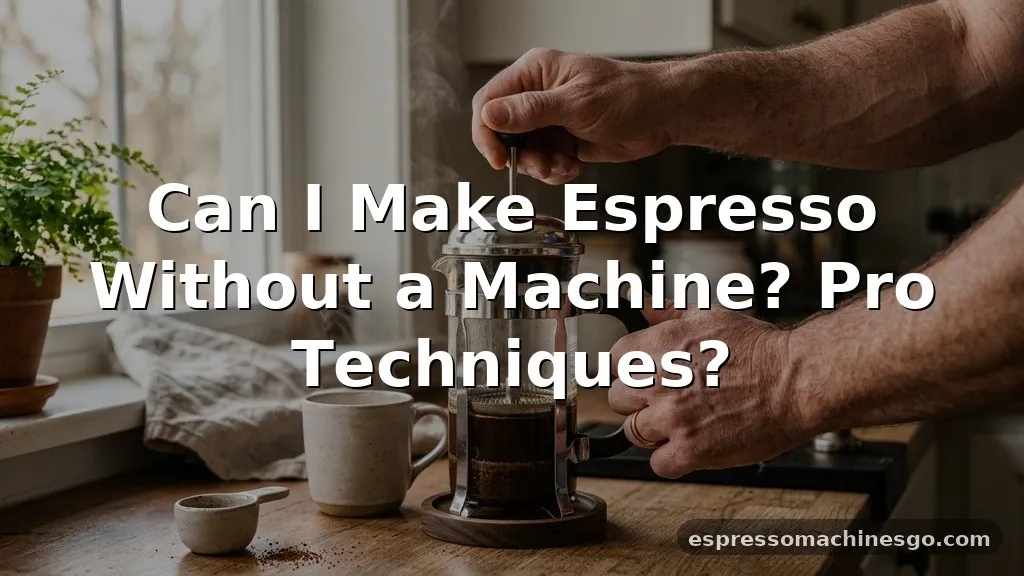
Many coffee enthusiasts ask themselves, “can I make espresso without a machine?” when they crave a concentrated, velvety shot but find themselves without an expensive, bulky appliance. The short answer is yes, you can replicate the essential characteristics of espresso—namely its intensity, body, and rich flavor profile—by utilizing manual brewing devices that generate sufficient force. While true Italian-style espresso requires a high-pressure pump to push water through tightly packed grounds, you can achieve a remarkably similar result at home using clever techniques that emphasize the right grind size, water temperature, and extraction time.
Understanding the Mechanics of Espresso Extraction
To successfully replicate espresso without a dedicated machine, you must first understand what makes espresso unique. Traditional espresso makers rely on nine bars of pressure to force hot water through a compressed puck of finely ground coffee.
This high-pressure environment is what emulsifies the coffee oils, creating that signature golden-brown crema and a syrupy mouthfeel. When you remove the machine from the equation, you are essentially aiming to maximize the extraction of solubles from a small amount of water to create a concentrated beverage.
The primary challenge is the lack of mechanical pressure. Without a pump, you cannot achieve true crema, which is a byproduct of high-pressure CO2 release. However, you can still create a concentrated, bold drink that serves as the perfect base for lattes, cappuccinos, or Americanos.
The key lies in your ability to manipulate variables like the coffee grounds texture and the water-to-coffee ratio. By using a finer grind than you would for drip coffee and a slightly lower water volume, you move closer to the flavor density of a traditional shot. It is less about mimicking the physics of an industrial pump and more about achieving the desired flavor concentration through deliberate, manual control.
The Moka Pot: The Closest Manual Alternative
The moka pot, often called a stovetop espresso maker, is widely considered the gold standard for those asking “can I make espresso without a machine?” This iconic Italian device uses steam pressure to push water up through a bed of coffee. While it produces roughly 1.5 to 2 bars of pressure—significantly less than a commercial pump—it is the most effective way to produce a heavy-bodied, intense shot of espresso coffee in a home kitchen.
To get the best results from your moka pot, start with freshly roasted coffee beans ground to a fine consistency, similar to table salt. Fill the bottom chamber with pre-heated water to prevent the metal from cooking the grounds while waiting for the pot to boil on the stove. This simple tweak ensures that the brewing process starts immediately, preventing a bitter, metallic taste.
Once you place the top section on and set it over medium heat, watch for the coffee to emerge from the center column. Remove the pot from the heat as soon as you hear a gurgling sound to avoid over-extraction. The result is a dark, potent liquid that holds its own against milk or sweeteners, effectively bridging the gap between standard drip coffee and a true espresso shot.
Utilizing the AeroPress for Concentrated Shots
The AeroPress is an incredibly versatile tool that allows for a surprising amount of control, making it a favorite for those who want to brew a quick, punchy cup. Although it is a manual method, the press plunger allows you to exert physical force on the coffee bed, which mimics the extraction process of a machine. By using a very fine grind and a shorter brew time, you can produce a “faux-espresso” that is clean, bright, and surprisingly complex.
To maximize the concentration, use a higher ratio of coffee to water. A standard starting point is about two tablespoons of finely ground coffee to about two ounces water. After pouring the water over the grounds, stir for ten seconds, then slowly and steadily apply pressure to the plunger.
The paper filter inside the cap ensures a clean cup, devoid of the grit often found in French press coffee. Because you are controlling the speed of the plunge, you can adjust the resistance to suit your preference.
If the press feels too easy, your grind is likely too coarse; if it is nearly impossible to push, your grind is too fine. Finding that sweet spot allows you to craft a concentrated shot that serves as an excellent foundation for any coffee-based beverage.
Can You Use a French Press for Espresso?
Many people wonder if a French press can be used to make espresso. While the French press is designed for immersion brewing—resulting in a lighter, more sediment-heavy cup—you can manipulate the process to increase the intensity.
To effectively use this device, you must significantly increase the dose of coffee and decrease the amount of water. While you will not generate any real pressure, the longer steeping time and the coarse filter can create a robust, full-bodied coffee that satisfies a craving for something stronger than standard morning brew.
It is important to note that a French press will never produce the syrupy mouthfeel of a machine-pulled shot because the immersion process does not emulsify the coffee oils in the same way. However, if you are looking for a bold, dark cup that mimics the strength of espresso, it is a viable option. Focus on using a medium-fine grind rather than the standard coarse grind, and reduce your steep time to about two minutes.
By pushing the plunger down slowly, you can achieve a concentrated extraction that pairs well with steamed milk. It is a different experience, but one that is highly enjoyable for those who appreciate a heavy, textured cup.
Addressing Topical Gaps: Common Misconceptions
When researching “can I make espresso without a machine,” many users encounter conflicting advice regarding the definition of espresso. A major gap in the common narrative is the confusion between “espresso-style” coffee and actual espresso. Technically, espresso is defined by the extraction method, not just the bean or the roast.
If you are not using high pressure, you are technically making “strong coffee,” not true espresso. However, for the home user, this distinction is largely semantic. The goal is the sensory experience—the rich flavor, the body, and the ability to cut through milk.
Another frequent gap is the role of the coffee bean itself. Many people believe they need “espresso roast” beans to make a good shot. In reality, you can achieve a delicious result with any high-quality bean.
The roast level is a matter of personal preference. While dark roasts are traditional, many modern specialty shops pull shots with lighter, single-origin beans. Do not feel limited by labels.
If you enjoy a floral, citrusy profile, feel free to use a light-roast Ethiopian coffee in your moka pot or AeroPress. The key is in the freshness of the roast and the precision of your preparation. For more information on the science of coffee extraction, you can consult the National Coffee Association for industry-standard brewing guidelines.
Comparison of Manual Brewing Methods
To help you decide which manual method is right for your kitchen, the following table compares the three most popular ways to create an espresso-like experience without a machine.
| Method | Pressure Level | Body/Texture | Ease of Use |
|---|---|---|---|
| Moka Pot | Low (Steam) | Heavy/Syrupy | Moderate |
| AeroPress | Manual (Air) | Clean/Bold | Easy |
| French Press | None (Immersion) | Full/Textured | Very Easy |
Each of these methods offers a unique way to take your coffee game to the next level. The moka pot remains the closest to the traditional espresso experience due to the steam pressure, while the AeroPress offers the most versatility. The French press, while the least “espresso-like,” is incredibly forgiving and produces a delicious, rich cup that is perfect for those who prefer a less clinical approach to their morning routine.
Refining Your Technique for Better Results
Regardless of the method you choose, consistency is the foundation of a great cup. You should always aim to weigh your coffee rather than measuring by volume. Using a kitchen scale ensures that you use the exact same amount of grounds every time, which is crucial when you are trying to replicate the intensity of a shot.
Furthermore, water quality plays a significant role in the final flavor. Since coffee is mostly water, using filtered water will remove any impurities that might clash with the delicate oils in your coffee.
Finally, do not be afraid to experiment. Coffee brewing is a craft, and the only way to find your perfect cup is to tweak one variable at a time. Change your grind size slightly, adjust the water temperature, or alter the steep time.
Over time, you will develop an intuitive sense of what your specific beans need to shine. Whether you use a moka pot to start your day or an AeroPress for an afternoon pick-me-up, you will find that the ability to make a high-quality, concentrated coffee drink without a machine is a rewarding skill that changes the way you view your daily brew.
Frequently Asked Questions
Is it possible to get crema without an espresso machine?
True crema is a byproduct of high-pressure CO2 extraction, which manual methods cannot replicate. While you might see a thin layer of foam or bubbles on top of a moka pot shot, it lacks the stable, golden-brown consistency of real espresso crema.
What is the best grind size for manual espresso?
For most manual methods like the moka pot or AeroPress, you want a fine grind—typically similar to table salt. If the coffee tastes too bitter, the grind is likely too fine and causing over-extraction; if it tastes sour or weak, use a slightly finer setting.
Can I use regular coffee beans for espresso?
Yes, you absolutely can. While some bags are labeled “espresso roast,” this usually just refers to a darker roast profile. You can use any coffee bean you enjoy. The most important factor is the freshness of the beans, ideally roasted within the last month.
How much coffee should I use for a single shot?
A standard single shot of espresso uses about 7 to 9 grams of coffee. If you are using a moka pot or AeroPress, aim for a ratio of approximately 1:2 or 1:3 (coffee to water) to ensure the resulting beverage is sufficiently concentrated for your needs.