
Many coffee enthusiasts ask, “Can you use coffee beans in an espresso machine?” The short answer is yes, you absolutely can, provided the beans are processed correctly. While the marketing on bags often distinguishes between “espresso beans” and “regular coffee beans,” the physical bean is identical at the source.
The primary difference between these categories is how the producer approaches the roast and the intended grind size. Understanding these nuances is the key to pulling a perfect shot of espresso at home.
Understanding the Relationship Between Coffee Beans and Espresso
When you look at a bag of coffee at your local shop, you might see labels like “Espresso Roast” or “Drip Blend.” These labels are often more about flavor profiling and marketing than they are about the biology of the coffee beans. Any high-quality Arabica or Robusta bean can technically be used to make espresso.
The espresso machine works by forcing hot water through a tightly packed puck of finely ground coffee at high pressure. Because this process is so efficient, it highlights both the best and the worst qualities of the coffee.
The reason manufacturers label certain bags as “espresso” is usually to signal that the coffee has been roasted to a darker level. A darker roast is more soluble and generally produces a thicker, more viscous body, which is a hallmark of traditional espresso.
However, modern specialty coffee has shifted toward lighter roasts that offer brighter acidity and more complex fruit notes. If you put a light-roast single-origin coffee into an espresso machine, you can still pull a shot; you simply need to adjust your variables—like temperature and grind—to ensure proper extraction.
The Critical Role of Grind Size in Espresso Extraction
The most significant barrier to using standard coffee in an espresso maker is the grind size. Most pre-ground coffee sold in supermarkets is designed for drip coffee brewers, which require a medium-coarse grind. If you use this in an espresso machine, the water will rush through the coffee puck too quickly, resulting in a sour, watery, and under-extracted shot that lacks the signature crema.
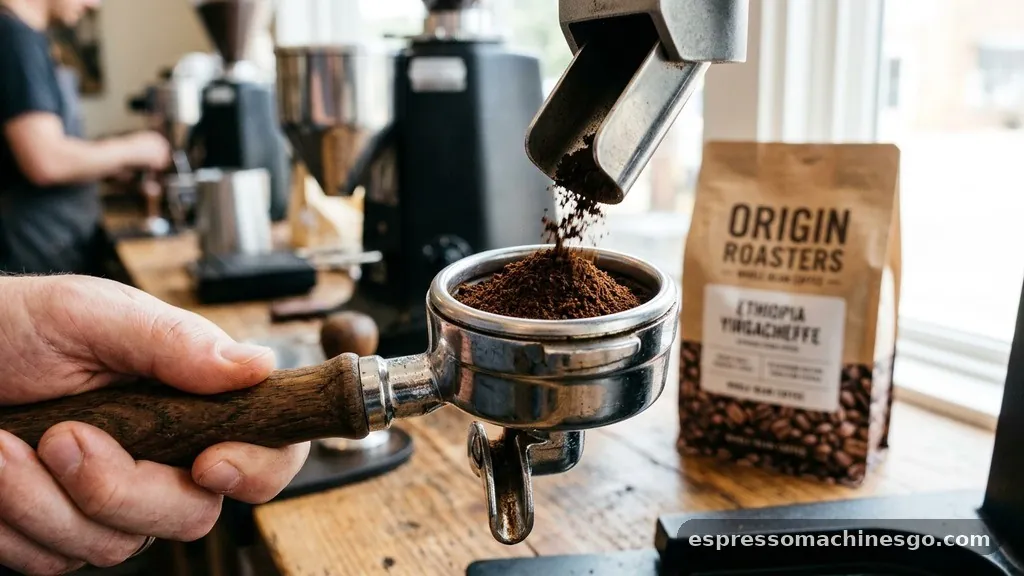
To successfully use standard roasted coffee for espresso, you must be able to grind the beans to a very fine, powdery consistency. This fine grind creates the necessary resistance against the machine’s pump, allowing the water to interact with the grounds for the required 25–30 seconds. If you find your shots are pulling too fast, it is a sign that your grind is too coarse.
Conversely, if the machine struggles to push water through or the drip is agonizingly slow, your grind is likely too fine. Finding the “sweet spot” is a process of trial and error that defines the barista experience.
Can I use pre-ground coffee?
While it is physically possible to put pre-ground coffee into a portafilter, it is rarely recommended. Pre-ground coffee loses its aromatic compounds quickly, and you will almost never find a pre-ground product at the store that is ground finely enough to create the necessary pressure for true espresso. For the best results, you should invest in a burr grinder that is capable of producing a consistent, fine particle size.
Roast Profiles: Darker vs. Lighter Beans
The roast level of your coffee beans significantly influences the final flavor profile and the physical behavior of the coffee in the basket. Traditionally, espresso was made with darker roasts because they are easier to extract and mask the bitterness often found in lower-quality commercial beans. These roasts are characterized by chocolatey, nutty, and smoky notes.
Lighter roasts, often referred to as “Nordic style” or modern specialty roasts, retain more of the bean’s original characteristics, such as floral, citrus, or berry notes. When using espresso machines with lighter roasts, you may need to increase the water temperature slightly to help extract those delicate sugars and acids.
| Feature | Dark Roast Espresso | Light Roast Espresso |
|---|---|---|
| Body | Thick, syrupy | Light, tea-like |
| Acidity | Low | High/Bright |
| Solubility | High | Low |
| Flavor profile | Chocolate, caramel, smoke | Fruit, floral, acidity |
The Technical Difference Between Espresso and Drip Coffee
Many newcomers assume that espresso beans are a different species of plant, but this is a common misconception. All coffee comes from the Coffea plant. The difference between espresso and drip coffee lies entirely in the brewing method.
Drip coffee relies on gravity, while espresso relies on mechanical pressure. This pressure is what emulsifies the oils in the coffee, creating the golden-brown foam known as crema.
When you use “regular” coffee for espresso, you are essentially asking the beans to perform in a high-pressure environment. If the beans were roasted specifically for a long, slow drip brew, they might be quite porous. When subjected to nine bars of pressure, these beans might extract too quickly or exhibit an unpleasant bitterness.
This is why many pros suggest that if you want to use non-espresso-labeled beans, look for medium-dark roasts that have a balanced sugar-to-acid ratio. You can learn more about the scientific standards for coffee quality at the Specialty Coffee Association website.
Troubleshooting Common Extraction Issues
If you decide to experiment with different beans, you will inevitably encounter situations where the shot does not taste right. This is part of the learning curve.
If your coffee tastes sour, it is likely under-extracted, meaning the water moved through the puck too fast or the water temperature was too low. If the coffee tastes bitter, burnt, or acrid, it is likely over-extracted.
To fix these issues, follow these steps:
- Check your grind size: If the shot is sour, grind finer. If it is bitter, grind coarser.
- Measure your input and output: Use a scale to ensure you are using the same amount of coffee (e.g., 18 grams) for every shot.
- Adjust your temperature: If your machine has a PID controller, try increasing the temperature for light roasts and decreasing it for dark roasts.
- Check your puck preparation: Ensure the bed is perfectly level so that the water flows through evenly without “channeling.”
Addressing Topical Gaps: Common Misconceptions
A common gap in information regarding this topic is whether you can damage your machine by using standard coffee. Some people fear that “regular” beans are too hard or oily for an espresso grinder.
While it is true that some very dark, oily roasts can clog certain high-end grinders over time, this is not because the beans are “regular” coffee—it is because of the roast level. Any bean that has been roasted into the second crack will be oily, regardless of whether it is marketed for espresso or drip.
Another gap concerns the caffeine content. Many people believe espresso has more caffeine by nature. In reality, caffeine is a function of the bean density and the volume of coffee used.
A standard shot of espresso has about the same caffeine as a cup of drip coffee. If you use a high-caffeine bean (like a Robusta blend) in your espresso machine, the resulting shot will be higher in caffeine than a shot made with a 100% Arabica bean, regardless of the roast profile.
Frequently Asked Questions
Is espresso just regular coffee grounds?
Espresso is not a specific type of coffee bean, but rather a method of preparation. You can use any coffee beans to make espresso, provided they are ground to a very fine, consistent powder that allows the machine to build up the necessary pressure for extraction.
Can I damage my espresso machine by using regular beans?
Generally, no. As long as you are using high-quality, whole-bean coffee that is free of foreign objects (like stones), your machine will be safe. Avoid using flavored beans, as the oils and syrups can gum up your grinder and the internal components of the espresso machine.
Why does my coffee taste thin when I use regular beans?
If your espresso tastes thin or watery, your grind size is likely too coarse. Without a fine enough grind, the water passes through the puck too quickly, failing to extract the oils and solids that give espresso its signature body and thick, rich mouthfeel.
What is the best roast for a beginner?
For beginners, a medium-dark roast is usually the easiest to work with. These beans are more soluble than light roasts, making them more forgiving during the extraction process. They tend to produce a balanced, sweet, and nutty cup that is less prone to the sharp, unpleasant sourness of under-extracted light roasts.