

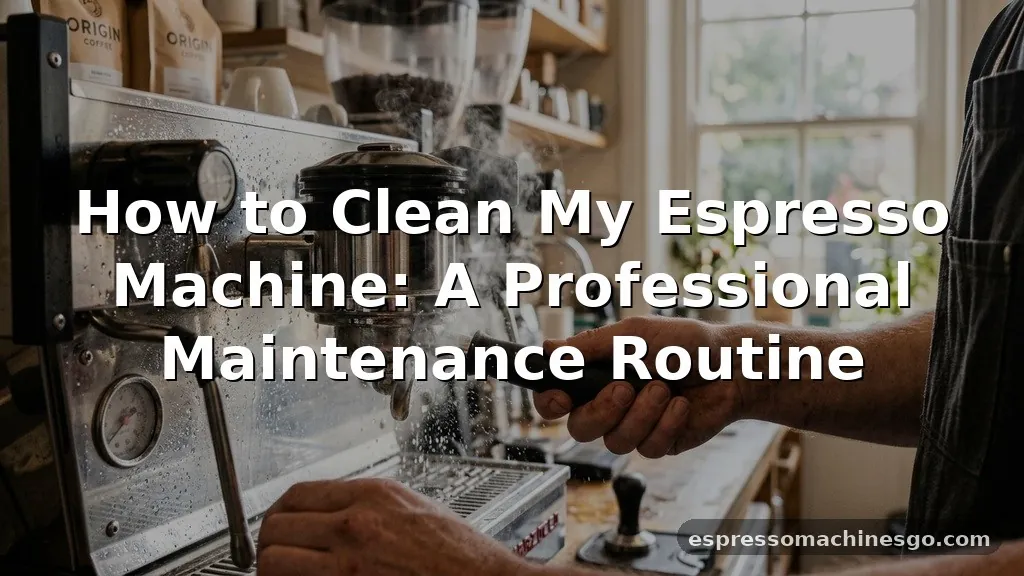
Maintaining your equipment is the single most effective way to ensure that every shot of espresso you pull tastes balanced, rich, and free of bitter, burnt notes. When you learn how to clean my espresso machine properly, you aren’t just performing a chore; you are protecting a precision instrument from the accumulation of mineral deposits and rancid oils.
Over time, coffee oils cling to the internal components, while calcium and magnesium from your water supply create scale that can choke the boiler and heating elements. By establishing a consistent maintenance rhythm, you extend the lifespan of your machine and guarantee that your morning ritual remains as high-quality as the day you unboxed the unit.
Establishing a Daily Cleaning Routine for Optimal Performance
The secret to a long-lasting machine lies in the daily habits you adopt immediately after your final cup of the morning. Every time you brew, microscopic particles of coffee and lingering oils coat the shower screen and the inside of the portafilter. If left to sit, these oils oxidize and turn rancid, which will impart a sour, unpleasant flavor to your next brew.
To prevent this, you should perform a simple water backflush after every session. This process involves locking in a blind basket—a solid filter basket without holes—and engaging the pump for five to ten seconds. This forces hot water back through the group head’s three-way solenoid valve, effectively rinsing away loose grounds and solubles before they have a chance to harden.
In addition to backflushing, the steam wand requires immediate attention. It is a common mistake to assume that purging the wand with steam is sufficient. While the steam clears the internal nozzle, it does nothing for the dried milk proteins on the exterior.
After steaming milk for a latte or cappuccino, take a damp, dedicated microfiber cloth and wipe the wand thoroughly. Following this, purge the steam wand one more time to clear any milk that might have been sucked back into the tip during the cooling phase. For a more comprehensive look at food safety and hygiene, you can reference the FDA guidelines on food equipment sanitation to understand why removing organic residue is critical for preventing bacterial growth.
Executing a Deep Clean with Specialized Cleaning Tablets
While daily rinsing handles surface-level debris, a deeper scrub is necessary every week or two, depending on your volume of use. This is where cleaning tablets or specialized espresso machine detergent become essential. Unlike vinegar or citric acid, these detergents are formulated specifically to emulsify coffee oils and break down stubborn proteins that water alone cannot touch.
To perform this, insert your blind basket into the portafilter and add a small amount of the detergent powder or a single tablet. Lock the portafilter into the group head and run the pump for five seconds, then pause for five seconds. Repeat this cycle five or six times.
The agitation caused by the pressurized water and the chemical reaction of the cleaner will loosen years of built-up gunk from the group head’s dispersion screen and the solenoid valve. After completing these cycles, remove the portafilter and rinse it thoroughly under hot water.
It is vital to perform a “clear” backflush—running the machine with just water and no detergent—at least three times afterward to ensure that no chemical residue remains in the lines. If you skip this step, your next few shots of espresso will have a soapy, metallic aftertaste that is nearly impossible to mask, no matter how high-quality your beans are.
Managing Descaling to Protect Internal Components
One of the most frequent questions owners have is how to deal with internal mineral buildup. Descaling is the process of removing limescale, which is the hard, white crust that forms when the minerals in your water react with the heat of the boiler. If you live in an area with “hard” water, this process is non-negotiable.
If you ignore it, the scale will eventually block the narrow tubes and valves, causing the pressure to drop or the machine to fail entirely. You should aim to descale your machine every three to six months, though you may need to do it more often if you aren’t using a water filtration system.
To descale, you must use a dedicated descaling solution rather than household vinegar. While vinegar is a popular DIY hack, it is often too acidic and can damage the rubber gaskets and seals inside the boiler. A commercial descaling solution is designed to dissolve calcium carbonate safely without corroding the metal or degrading the internal components.
You pour the solution into the water reservoir, run a portion of it through the group head and the steam wand, and then let it sit for the time recommended by your machine’s manual. Once the soaking period is complete, you must flush the system with multiple reservoirs of fresh, clean water to ensure all traces of the descaling agent are gone.
Comparing Cleaning Methods for Various Machine Types
Not all machines require the same approach. The complexity of your cleaning routine will depend on whether you have a simple thermoblock machine or a dual-boiler prosumer unit. The following table summarizes the common maintenance requirements based on the machine type:
| Component | Frequency | Action Required |
|---|---|---|
| Group Head | Daily | Wipe with damp cloth and flush water |
| Portafilter/Basket | Daily | Rinse with hot water; scrub with brush |
| Steam Wand | Every Use | Wipe exterior; purge interior steam |
| Boiler/Internal | Quarterly | Full descaling cycle |
As shown above, the frequency of your maintenance is just as important as the method. If you use your machine multiple times a day, you are essentially accelerating the timeline for these tasks. It is better to perform small, consistent cleanings than to wait for the machine to show signs of distress, such as a sputtering steam wand or a group head that drips long after the pump has stopped.
Addressing Common Cleaning Misconceptions
A major topical gap in the world of espresso maintenance is the reliance on “home remedies” that can do more harm than good. Many enthusiasts look for ways to clean their equipment using pantry staples. While baking soda can be mildly effective for scrubbing the portafilter basket, it should never be introduced into the machine’s internal plumbing.
Similarly, using lemon juice or vinegar as a descaler is a risky gamble. These substances have a high acidity that can strip the protective plating off brass components, leading to metallic leaching in your coffee.
Another misconception is that the “self-clean” button on many modern machines is a magic fix. While these automated cycles are helpful, they are rarely as thorough as a manual scrub. They often fail to reach the nooks and crannies inside the group head where oils hide.
Even if your machine has an automated cleaning cycle, you should still manually inspect the shower screen and the drip tray. The drip tray, in particular, is a breeding ground for mold if not emptied and washed with hot, soapy water at least once a week. Neglecting these seemingly minor areas can lead to a foul odor that permeates your kitchen and ruins the sensory experience of brewing.
Best Practices for Water Quality and Long-Term Care
The quality of the water you put into the tank is the single most significant factor in how often you will need to perform heavy maintenance. Using filtered or bottled water with a balanced mineral content will significantly slow down the rate of scale accumulation.
If you use tap water, you are essentially inviting calcium deposits to build up in the boiler. Investing in an in-tank water filter or a pitcher-based filtration system is a proactive step that saves time and money in the long run.
Beyond water, consider the state of your consumables. Are you using fresh beans? Old, oily beans will clog your grinder and your group head much faster than fresh, light-to-medium roasts.
If you notice that your machine requires cleaning more frequently than usual, check your coffee storage habits. Furthermore, keep an eye on your gaskets. These rubber rings seal the portafilter to the group head and will eventually dry out and crack.
Replacing them once a year is an easy, inexpensive way to ensure your machine maintains proper pressure. When you treat the machine as a precision tool rather than a kitchen appliance, you ensure that it remains a reliable companion for years of perfect shots.
Frequently Asked Questions
- How often should I perform a deep clean on my espresso machine? Generally, you should perform a deep clean with detergent once a week if you use the machine daily. If you only pull a few shots per week, you can extend this to every two weeks, but never go longer than a month without a thorough detergent backflush.
- Can I use vinegar to descale my machine instead of a commercial solution? It is strongly recommended to avoid vinegar. Vinegar is highly acidic and can corrode the internal rubber seals and gaskets of your machine. Commercial descaling solutions are specifically buffered to remove mineral buildup safely without damaging the delicate internal components of your boiler and pump.
- What should I do if my steam wand is clogged with dried milk? First, try soaking the tip in hot water to soften the residue. If that fails, use a specialized steam wand cleaning tool or a paperclip to gently clear the nozzle. Never use harsh metal scrapers that could scratch the internal surface of the wand, as this will make future cleaning harder.
- Is it necessary to clean the drip tray every day? While you don’t need to wash it with soap daily, you should empty and rinse it frequently to prevent stagnant water, mold, and unpleasant odors. A quick rinse every 48 hours is usually sufficient, followed by a deeper soapy wash during your weekly maintenance routine.