

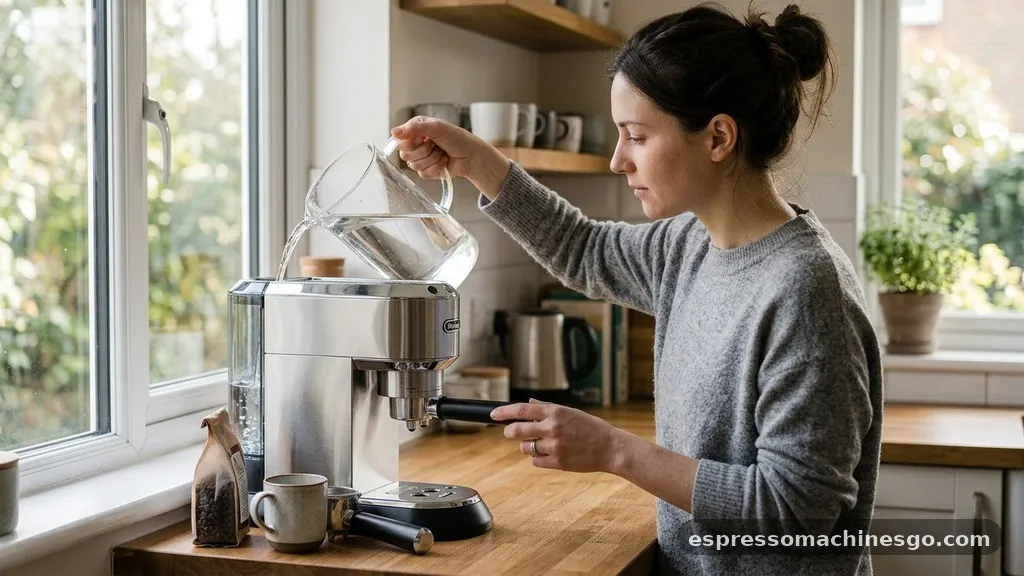
Mastering your DeLonghi espresso and coffee machine requires more than just pushing a button. These sophisticated appliances, often featuring high-quality stainless steel construction, are designed to bring the café experience into your kitchen.
Whether you are using an all-in-one coffee system or a dedicated manual pump machine, understanding the fundamental mechanics of extraction, pressure, and temperature control is essential for crafting a perfect cup. By learning how to properly calibrate your grind size, tamp your puck, and steam your milk, you can unlock the full potential of your device and enjoy professional-grade results every single morning.
Initial Setup and Preparing Your Machine for First Use

Before you pull your first shot, you must ensure the machine is correctly primed and calibrated. New users often overlook the “break-in” period, which is crucial for flushing out manufacturing residues and ensuring internal components are properly lubricated with water.
Start by filling the water reservoir with fresh, filtered water. Using filtered water is one of the most important coffee tips because it prevents mineral buildup, which can damage the internal heating elements and alter the flavor profile of your brew.
Once the tank is filled, place a large container under the steam wand and another under the portafilter or coffee outlet. Turn the machine on and run a full cycle of hot water through the system without any coffee grounds. This process, often referred to as priming, clears the lines and ensures the thermoblock or boiler is at the correct operating temperature.
If you have an all-in-one espresso model with an integrated grinder, take a moment to adjust the grind setting to a medium-fine consistency. A common mistake is using pre-ground coffee that is too coarse, which leads to weak, watery espresso.
For those who want to ensure their warranty remains valid and receive updates on new De’Longhi launches, remember to register product details on the official website. This allows you to track your orders register and potentially qualify for benefits like early access to new accessories.
Mastering the Art of Espresso Extraction
The heart of any espresso machine is the extraction process. To achieve that coveted golden-brown crema, you must balance three variables: dose, grind, and pressure. Start by grinding your beans fresh.
If your machine has a built-in grinder, adjust the dial to a fine setting. If you are using a separate grinder, aim for a texture similar to table salt.
Dose approximately 18 to 20 grams of coffee into your portafilter for a double shot. The distribution of the grounds is just as important as the quantity; use a distribution tool or your finger to ensure the coffee is level before tamping.
Tamping is where many beginners struggle. You need to apply consistent, level pressure—roughly 30 pounds—to create a flat, compressed puck. If the puck is uneven, the water will find the path of least resistance, leading to “channeling,” where some coffee is over-extracted and bitter while other parts are under-extracted and sour.
Once the portafilter is locked into the group head, start the extraction immediately. A perfect shot should take between 25 and 30 seconds to pull.
If it runs too fast, your grind is too coarse; if it drips slowly or doesn’t flow at all, your grind is too fine or your tamp is too heavy. You can read more about the physics of coffee brewing at the National Coffee Association to better understand the science behind these variables.
Using the Milk Frother for Café-Quality Lattes
Frothing milk is a skill that separates home baristas from casual coffee drinkers. Whether you are using a manual steam wand or an automated system, the goal is to create “micro-foam”—a velvety, paint-like texture that integrates seamlessly with your espresso. Start with cold, fresh milk in a chilled stainless steel pitcher.
Insert the wand just below the surface of the milk to introduce air, creating a soft “hissing” sound. This is the stretching phase. Once the pitcher becomes warm to the touch, submerge the wand slightly deeper to create a vortex, which breaks down larger bubbles into the desired micro-foam.
Troubleshooting Common Frothing Issues
- If your milk is too bubbly, you are stretching for too long; submerge the wand earlier.
- If the milk is flat, you aren’t creating enough of a vortex to incorporate air.
- If the milk scalds, you are heating it past 150 degrees Fahrenheit, which destroys the natural sugars.
- For plant-based milks, use “barista” versions, as they contain stabilizers that help with foam structure.
Maintenance and Cleaning for Longevity
Keeping your machine in peak condition is vital for consistent performance. Daily maintenance is the easiest way to avoid complicated repairs. After every use, purge the steam wand to clear out residual milk and rinse the portafilter to remove spent grounds.
Once a week, perform a deeper clean. Remove the shower screen from the group head if possible, and soak the portafilter basket in a solution of hot water and specialized espresso machine cleaner.
If you have an all-in-one combination machine, pay special attention to the grinder burrs. Oil buildup from dark roast beans can cause the grinder to clog. Use a small brush to sweep away loose grounds and, if your machine supports it, use commercial grinder cleaning tablets.
Furthermore, descaling is non-negotiable. Depending on your water hardness, you should descale your machine every 3 to 6 months to remove calcium deposits.
Failure to descale will eventually restrict water flow and cause the internal pump to overheat, potentially leading to a total machine failure. Always follow the manufacturer’s instructions for the specific descaling solution recommended for your model.
Comparing Espresso and Drip Coffee Functions
Many users choose a De’Longhi combination coffee machine because it offers the flexibility of both concentrated espresso and standard drip coffee. Understanding the differences in how these functions operate will help you make better beverage choices. Drip coffee relies on gravity and a slower extraction time to produce a larger volume of liquid, whereas espresso relies on high-pressure pumps to force water through finely ground coffee.
| Feature | Espresso Function | Drip Coffee Function |
|---|---|---|
| Pressure | 9-15 Bars | Atmospheric (Gravity) |
| Extraction Time | 25-30 Seconds | 5-8 Minutes |
| Coffee Grind | Fine/Powder | Medium/Coarse |
| Strength | Concentrated/Bold | Milder/Standard |
When switching between modes on an all-in-one espresso machine, ensure you are using the correct filter basket. The pressurized baskets used for espresso are designed to mimic the resistance of a professional machine, while the drip baskets are meant for paper filters or mesh screens that allow for a faster flow rate. Mixing these up will result in a poor cup of coffee every time.
Advanced Techniques and Expert Coffee Tips
To truly elevate your game, start experimenting with temperature surfing and pre-infusion. Some advanced De’Longhi models allow you to adjust the PID (Proportional-Integral-Derivative) controller to change the brewing temperature. Light roasts generally benefit from higher temperatures (around 200-205°F) to extract sweetness, while darker roasts perform better at lower temperatures (195-198°F) to avoid drawing out too much bitterness.
Pre-infusion, if available on your model, gently saturates the puck with a small amount of water before applying full pressure. This helps to reduce channeling and produces a more balanced, uniform extraction.
Another pro tip is to weigh your output. Rather than relying on the “eyeball” test or the machine’s default timer, use a digital gram scale under your cup. A standard ratio for espresso is 1:2, meaning 18 grams of ground coffee should yield 36 grams of liquid espresso.
By tracking these metrics, you turn your morning routine into a repeatable science experiment. If you are looking to upgrade your setup, check the current deals on the official store, where you can often find options to pay interest-free or utilize installments free of extra charges, making high-end equipment more accessible.
Addressing Topical Gaps and Common User Questions
Users often search for specific “hacks” regarding their machines. One common gap is how to handle “sour” espresso. This almost always indicates under-extraction.
To fix this, increase your yield, grind slightly finer, or increase your water temperature. Conversely, if your espresso is intensely bitter, it is likely over-extracted. Try a coarser grind or a shorter extraction time.
Another gap involves using non-dairy milks. While almond and soy milk are popular, they often lack the fat content of cow’s milk, making them harder to foam. Look for milks labeled “barista edition” for the best results.
Regarding the setup process, many people are intimidated by the initial configuration. Remember that the “first hour” of ownership is for reading the manual and ensuring you have the right accessories.
Do not rush to make a latte before you have successfully run a “blank” shot of just water. This ensures your pump is primed and the machine is ready to provide the consistent pressure required for a quality extraction.
Frequently Asked Questions
How do I descale my De’Longhi espresso machine?
To descale, add the manufacturer-recommended descaling solution and water to the tank. Place a container under the steam wand and run the descaling cycle according to your model’s instructions. Once finished, run at least two full tanks of fresh water through the system to rinse away any remaining chemical residue.
Can I use any coffee beans in my machine?
Yes, you can use any beans, but fresh-roasted coffee is best. Avoid beans that have been sitting on a shelf for months. If your machine has a built-in grinder, avoid “oily” dark roasts, as they can clog the burrs and internal chutes, requiring more frequent manual cleaning to maintain performance.
Why is my espresso shot watery?
Watery shots are usually caused by a grind that is too coarse, a dose that is too small, or insufficient tamping. Ensure your coffee is ground to a fine consistency similar to table salt, use a consistent 18-20 gram dose for a double shot, and apply firm, level pressure when tamping.
How often should I clean the steam wand?
You should purge the steam wand with a burst of steam immediately after every use to blow out milk residue. Wipe the exterior with a damp, clean cloth. If milk dries on the wand, it becomes a breeding ground for bacteria and will clog the delicate air-intake holes.