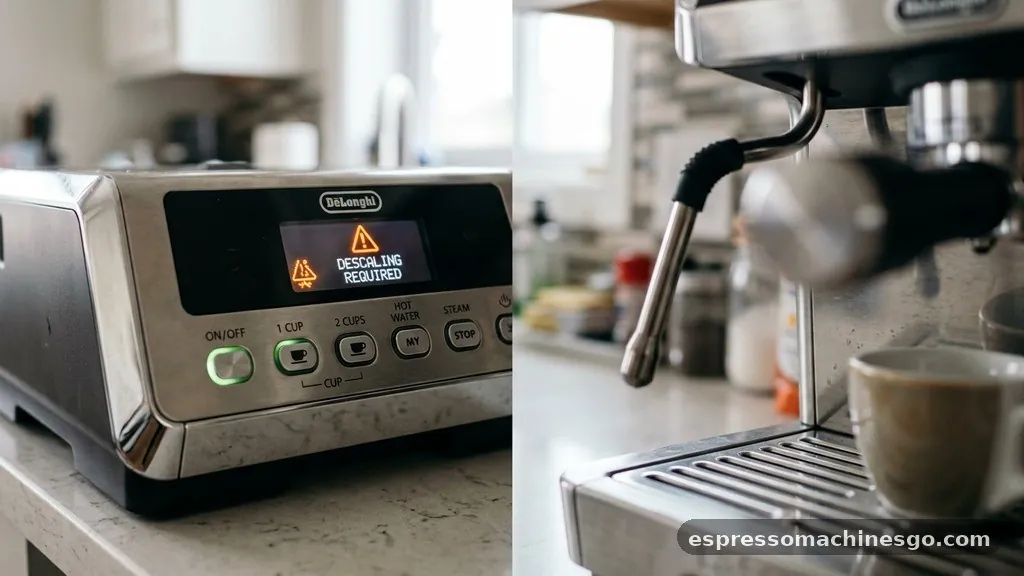
Maintaining your coffee equipment is essential for consistent flavor, and learning how to descale De’Longhi espresso machine models is the most important part of that process. Over time, the internal components of your device accumulate limescale, a mineral buildup caused by calcium and magnesium found in tap water.
If left untreated, this residue restricts water flow, alters the temperature of your brew, and can eventually lead to permanent internal damage. By following a structured maintenance routine, you ensure that every cup of espresso you pull is as rich and aromatic as the day you first unboxed the unit.
Recognizing the Signs Your Machine Needs Descaling
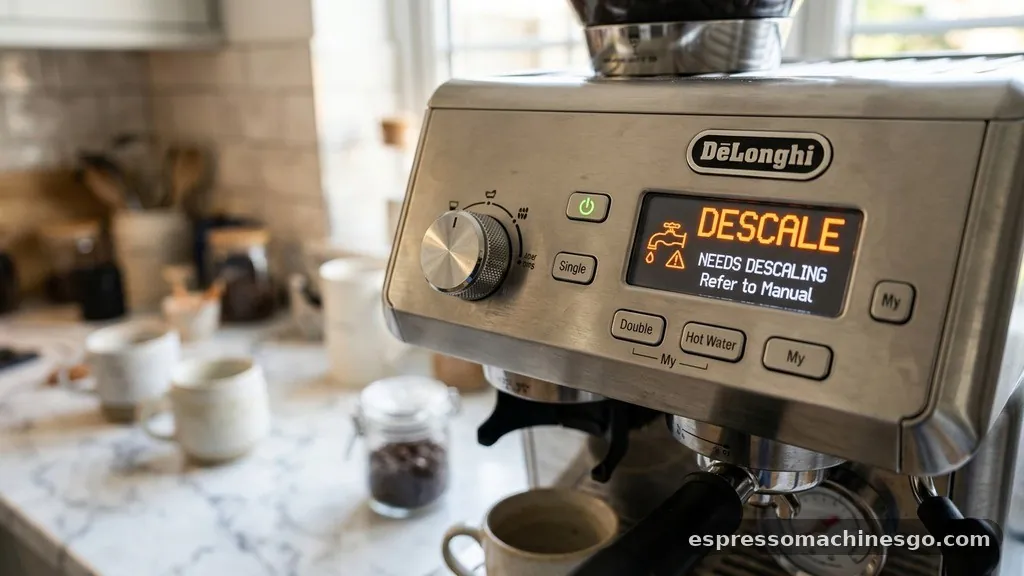
The most reliable indicator that your unit requires attention is the illumination of the descaling light. Most modern De’Longhi units are equipped with sensors that track the volume of water passed through the internal thermoblock.
When this volume reaches a specific threshold, the control panel alerts you that it is time to perform a cleaning cycle. Ignoring this signal is a common mistake; as scale builds up, the pump has to work significantly harder to push water through the narrow pipes, which increases noise levels and puts unnecessary strain on the motor.
Another subtle sign is a noticeable decrease in the temperature of your coffee. Limescale acts as an insulator, preventing the heating element from transferring heat efficiently to the water passing through. If your morning shot feels lukewarm despite the machine being on for several minutes, or if the flow rate has slowed to a thin, sputtering stream, you are likely overdue for a maintenance cycle.
You should also observe the clarity and volume of the liquid; if the machine makes a grinding or straining noise during the pour, it is struggling against internal blockage. Addressing these recurring problems early prevents the need to seek out authorized service centers later, as most malfunctions related to scale are considered preventable maintenance issues rather than factory defects.
Choosing the Right Descaler Solution
When you begin the process, you must choose the correct agent. De’Longhi strongly advises against using household items like vinegar or citric acid crystals. While these may seem like cost-effective alternatives, they are often too acidic or difficult to rinse out completely, leaving behind a lingering odor and potentially corroding the internal seals of your machine.
Instead, you should always use the official descaler solution formulated by the manufacturer. This specialized fluid is designed to break down calcium deposits safely while ensuring that no chemical residue remains in your water tank or brewing unit after the rinse cycle.
The official formula is lactic acid-based, which is highly effective at dissolving mineral deposits without damaging the delicate aluminum or stainless steel components found in your appliance. If you are struggling to find solution options in your local area, you can easily order them online. Many users find that keeping a stock of two or three bottles is a smart practice, as the frequency of descaling depends largely on the hardness of your local water supply.
If you live in an area with “hard” water, you will naturally need to perform this task more frequently than someone in a soft-water region. For more information on water hardness and its impact on household appliances, you can consult the United States Geological Survey resource on water hardness to understand the mineral content in your area.
Step-by-Step Descaling Process
The process for descaling varies slightly depending on whether you have a fully automatic bean-to-cup system or a manual pump-driven model. Regardless of the specific model, the core logic remains the same: you are introducing a cleaning agent into the system to dissolve buildup and then flushing the system with fresh water.
Preparation and Initial Setup
Before starting, ensure that the water tank is completely empty. Remove the water filter if your machine has one installed, as the descaling agent will ruin the filter cartridge. Pour the recommended amount of descaler solution into the tank and fill the remainder with fresh water according to the instructions on the bottle. Place a large container, at least 1.5 liters in capacity, under the hot water spout and the coffee spouts to catch the discharge.
Executing the Cycle
1. Turn the machine on and wait for it to reach the ready state. 2. Activate the descaling mode by pressing the dedicated button or navigating the menu as described in your manual. 3. Once the cycle begins, the machine will alternate between dispensing the solution through the nozzles and pausing to allow the agent to work on the internal scale. 4. Do not turn the machine off during this process, even if it seems to stop for a few minutes; this is a normal part of the chemical reaction. 5. Once the tank is empty, the machine will signal you to rinse. Rinse the tank thoroughly, fill it with fresh, cold water, and initiate the rinse cycle. This step is vital to ensure no descaler residue ends up in your coffee.
Comparison of Descaling Methods by Machine Type
Different product lines require slightly different approaches to maintenance. Understanding how your specific model handles the process will save you time and frustration.
| Machine Series | Primary Control Method | Rinse Requirement |
|---|---|---|
| Magnifica (Automatic) | Button/Dial Combination | Two Full Tanks |
| Dedica (Pump) | Steam/Coffee Button Combo | One Full Tank |
| La Specialista | Menu/Display Navigation | Two Full Tanks |
| Nespresso Lattissima | Dedicated Descale Light | One Full Tank |
As shown in the table above, the volume of water required for rinsing changes based on the internal capacity of the boiler. Always refer to your specific usage guides to ensure you are rinsing enough times to flush the system completely. If you are ever unsure, performing an extra rinse cycle is always better than under-rinsing.
Addressing Common Troubleshooting Issues
Even when following instructions perfectly, you may occasionally run into issues. If the machine stops mid-cycle and shows an error code, check to see if the water tank is seated properly or if the internal waste bin is full.
Sometimes, if the machine has not been descaled in a long time, large chunks of scale may break off and clog the nozzle. If you notice water leaking from the spouts or a complete failure to dispense, do not attempt to force the machine to work.
In these cases, you may need to consult virtual assistant tools provided on the official support website. These digital assistant usage platforms often provide interactive walkthroughs that can help you identify if a sensor has been tripped or if a physical blockage is preventing the flow. If the machine remains unresponsive, it is time to look at your warranty information and your information certificate to see if you are eligible for a repair.
Remember that while you can perform routine maintenance yourself, attempting to disassemble the internal pump or boiler will often void your warranty. Keep all receipts and documentation stored in a safe place.
Best Practices for Long-Term Machine Health
To minimize the frequency of descaling, you should focus on the quality of the water you put into the machine. Using a water softening filter is a highly effective way to reduce the amount of calcium that enters the system. These filters should be replaced every two months or as indicated by the machine’s settings.
Furthermore, if you are not planning to use your espresso maker for an extended period, such as during a vacation, make sure to drain the system completely. Leaving stagnant water in the pipes allows for mineral precipitation and potential bacterial growth, both of which are undesirable for your morning routine.
* Always use filtered water to reduce mineral buildup.
* Keep the steam wand clean by wiping it down after every use to prevent milk proteins from clogging the tips.
* Regularly empty the drip tray and grounds container to maintain proper internal airflow.
* Follow the manufacturer’s recommend schedule for descaling, rather than waiting for the light to turn on, if you know you have particularly hard water.
By treating your machine as a precision instrument, you will find that it rewards you with years of reliable service. The goal is to make these maintenance steps a habit rather than a chore. If you find the process difficult to remember, you can set a recurring reminder on your calendar every three months, or simply keep the descaler solution next to your coffee beans so that it is always in your line of sight.
Frequently Asked Questions
How often should I descale my De’Longhi machine?
You should generally descale every three months, or whenever the machine’s warning light illuminates. If you live in an area with very hard water, you may need to perform the process more frequently to prevent significant mineral buildup in the internal boiler and pipes.
Can I use vinegar to clean my espresso machine?
It is not recommended to use vinegar. Vinegar is highly acidic and can leave a strong, unpleasant odor in your machine that is difficult to remove. It may also corrode internal seals and gaskets, potentially leading to leaks or damaging the specialized internal components of your unit.
What happens if I ignore the descaling light?
Ignoring the light leads to severe limescale accumulation. This causes the pump to struggle, reduces the water temperature, and can eventually clog the internal valves entirely. This often results in a machine that requires professional repair or, in some cases, becomes too damaged to function correctly.
Where can I find the specific instructions for my model?
You can find specific instructions in the printed manual that came with your unit. If you have lost it, you can visit the official De’Longhi support website, where they provide digital versions of all usage guides based on your specific model number for easy reference.