

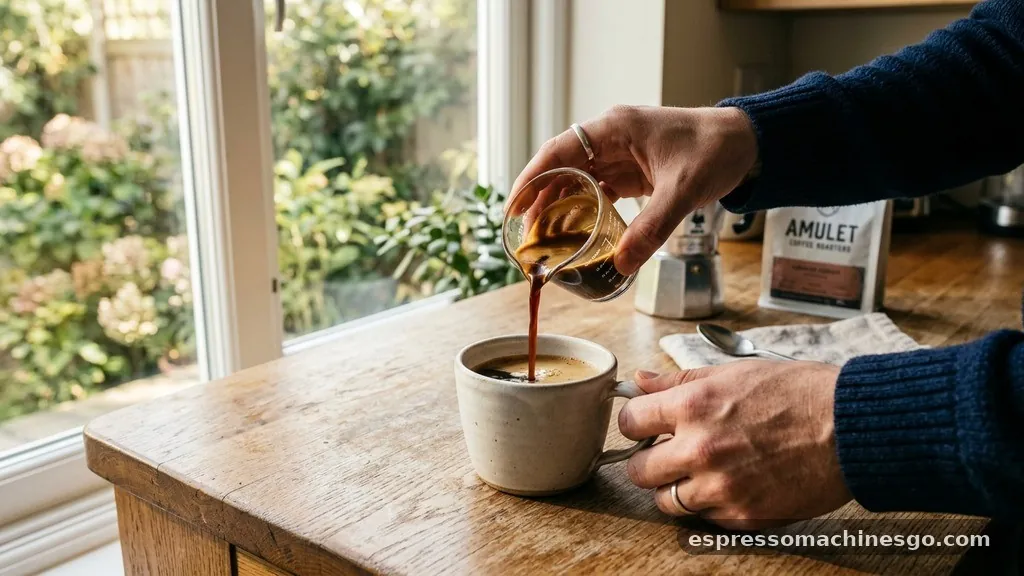
Creating a cafe-quality beverage in your own kitchen does not require an expensive, countertop-cluttering espresso machine. While the traditional definition of a latte involves a shot of espresso topped with steamed milk and a thin layer of microfoam, you can replicate this experience using simple tools already found in your pantry.
By understanding the core ratios and the science of milk texturing, you can make a delicious vanilla latte or a classic plain version that rivals your local coffee shop. The secret lies in creating a strongly brewed coffee base that mimics the intensity of espresso, combined with manual techniques to froth milk into a silky, velvety consistency.
Understanding the Coffee Base for a Homemade Latte

To successfully replicate a latte, you must first address the coffee foundation. A standard espresso shot is highly concentrated, typically extracted under high pressure.
When you do not have an espresso machine, you must compensate for the lack of pressure by increasing the coffee-to-water ratio. The goal is to produce a small volume of very potent liquid that can stand up to the richness of the warm milk without becoming diluted or watery.
The most effective way to achieve this intensity is by using a moka pot or a French press. A moka pot, often called a stovetop espresso maker, uses steam pressure to force water through coffee grounds, resulting in a rich, syrupy extraction that is remarkably close to authentic espresso. If you do not own a moka pot, you can use a French press by allowing the coffee to steep for a slightly longer duration than usual—around five to six minutes—using a finer grind size than you would for standard drip coffee.
This creates a bold, full-bodied concentrate. If you are in a rush, a very strong instant coffee or a concentrated pour-over can suffice, though the flavor profile will be slightly different. The key is to ensure the brewed coffee is concentrated enough to provide that necessary bitter, aromatic punch that balances the sweetness of the milk.
Mastering Milk Texturing Without a Steam Wand
The signature element of a latte is the texture of the milk. Professional baristas use a wand to inject air into the milk while simultaneously heating it, creating microfoam.
At home, you can achieve a similar result by heating the milk first and then introducing air manually. A common misconception is that you need a specialized device; in reality, a simple glass jar with a lid or a French press can produce excellent results.
To begin, pour your milk into a microwave-safe container and heat it until it reaches roughly 150 degrees Fahrenheit. If you do not have a thermometer, look for the point where the milk begins to steam but is not yet simmering or boiling. Once the milk is hot, you can use one of these two effective methods:
- The Jar Method: Pour the hot milk into a clean glass jar, filling it no more than halfway. Screw the lid on tightly and shake vigorously for 30 to 60 seconds. The agitation creates tiny air bubbles, transforming the liquid into a creamy, stable foam.
- The French Press Method: Pour your hot milk into an empty French press. Quickly pump the plunger up and down for about 20 seconds. This method is often superior to the jar technique because the mesh screen creates a more uniform, dense, and glossy microfoam that mimics professional steaming.
Comparing Coffee Preparation Methods
Choosing the right equipment for your coffee base changes the final character of your drink. While any strong coffee will technically work, different methods offer varying levels of body and crema-like mouthfeel.
| Method | Flavor Profile | Ease of Use | Strength |
|---|---|---|---|
| Moka Pot | Bold, intense, slightly bitter | Moderate | Very High |
| French Press | Full-bodied, earthy | Easy | High |
| Aeropress | Clean, bright, concentrated | Easy | High |
| Instant Coffee | Consistent, less complex | Very Easy | Moderate |
The Importance of Temperature and Ratio
Precision matters when you are trying to replicate a balanced drink. A latte is typically composed of one part coffee to three or four parts milk. If you add too much coffee, the drink becomes thin and bitter; add too much milk, and you lose the coffee’s character entirely.
Furthermore, temperature plays a critical role in how our taste buds perceive sweetness. Milk contains natural sugars called lactose, which become more perceptible as the temperature rises. If you overheat the milk, you risk scalding it, which produces an unpleasant, sulfurous smell and a burnt taste.
Always aim for a temperature that is hot to the touch but comfortable to drink immediately. If you are preparing a flavored beverage, such as a vanilla latte, add your syrup or sweetener to the coffee base before you pour in the milk.
This ensures the sweetener is fully dissolved and evenly distributed throughout the cup. If you add the syrup to the top of the foam, it will sink through unevenly and likely leave a sugary residue at the bottom of the mug.
Common Pitfalls and Troubleshooting
Even with the best intentions, making coffee at home can sometimes go awry. One common issue is “flat” foam. If your milk does not froth until it becomes creamy, the culprit is often the fat content or the temperature.
Whole milk consistently produces the best results due to its protein and fat content, which stabilize the bubbles. If you are using plant-based alternatives, look for “barista edition” cartons, as these are formulated with added stabilizers to help them froth like dairy milk.
Another frequent problem is a weak flavor. If you find your latte tastes like warm milk with a hint of coffee, you are likely using too much water during the brewing process. Remember that you are creating a concentrate, not a standard cup of coffee.
Try reducing the amount of water you use to brew your beans by half. Additionally, ensure your coffee is fresh. Old, stale grounds will never produce the aromatic intensity required to cut through the sweetness of the milk, regardless of the method you use.
Addressing the Difference Between Lattes and Cappuccinos
A frequent question among home brewers is how to distinguish a latte from a cappuccino. The primary difference lies in the ratio of milk to foam. A cappuccino is traditionally defined by a much thicker layer of airy, dry foam, often resulting in a drink that feels lighter in the hand.
A latte, by contrast, should be mostly steamed milk with only a very thin layer—about a centimeter—of microfoam on top. When you are frothing your milk at home, aim for a “wet paint” texture. If the foam looks like stiff peaks on a meringue, you have made a cappuccino-style foam.
For a latte, you want a liquid-like texture that pours smoothly and integrates with the coffee rather than sitting on top like a cap. To learn more about the history of these drinks and the proper preparation standards, you can visit the National Coffee Association for detailed brewing guidelines.
Customizing Your Homemade Latte
Once you have mastered the basic technique, you have a blank canvas for experimentation. A homemade latte is significantly cheaper than a store-bought version, allowing you to invest in high-quality ingredients like single-origin coffee beans or artisanal syrups. You can incorporate spices directly into your coffee grounds before brewing—such as a dash of cinnamon, cardamom, or nutmeg—to infuse the coffee with aromatics during the extraction process.
When it comes to the milk, do not be afraid to experiment with different varieties. While cow’s milk is the standard, oat milk has gained popularity for its neutral flavor and creamy texture, which holds up exceptionally well against strong coffee.
Almond milk is another common choice, though it often requires more aggressive frothing to achieve a stable texture. If you find that your milk is not frothing well, ensure your container is perfectly clean; any residual grease or oils can prevent the proteins in the milk from creating that essential, long-lasting foam.
Frequently Asked Questions
Can I make a latte with regular drip coffee?
While you can combine drip coffee and frothed milk, it will be quite diluted because drip coffee is much thinner than espresso. To get closer to a true latte, use a very high coffee-to-water ratio or brew the coffee using a method like a moka pot.
Is a latte just coffee with frothed milk?
Essentially, yes, but the key is the ratio and the texture. A latte is defined by having a significant amount of steamed, silky milk with only a thin layer of microfoam, whereas other drinks like cappuccinos emphasize a much thicker, airier foam layer on top.
What is the easiest way to froth milk at home?
The easiest method is using a glass jar with a lid. Simply heat your milk, pour it into the jar until it is half full, screw the lid on tightly, and shake it vigorously for about 30 to 60 seconds until the volume doubles and the texture becomes creamy.
Can I make an iced latte without a machine?
Yes. Simply brew a concentrated coffee using a moka pot or a French press, pour it over a glass filled with ice, and then top it with cold milk. You can even froth cold milk in a French press to add a creamy, chilled foam layer to the top.