Achieving a rich, syrupy shot of espresso without an expensive, bulky machine might sound like a reach, but it is entirely possible if you understand the physics behind the brewing process. Many coffee enthusiasts believe that espresso coffee is strictly defined by the high-pressure extraction found in industrial-grade espresso makers, but at its core, espresso is simply a concentrated form of coffee created by forcing a small amount of hot water through finely-ground beans.
By mastering manual techniques, you can create a beverage that captures that bold, intense flavor profile right in your own kitchen. Whether you are aiming to replicate the mouthfeel of a traditional shot or simply want a potent base for your morning latte, learning how to make espresso at home without a machine will change your relationship with your daily caffeine ritual forever.
The Science of Espresso Extraction
To understand why we can mimic espresso without a high-pressure machine, we must first look at what actually happens during extraction. Espresso is defined by three main variables: the grind size, the ratio of coffee to water, and the pressure applied.
While an espresso machine uses a pump to generate 9 bars of pressure, manual methods rely on physical force, steam pressure, or immersion time to achieve a high concentration. The goal is to maximize the surface area of the coffee grounds so that the water picks up as much flavor, oils, and solids as possible in a short window.
When you use a manual method, you are essentially performing a high-intensity infusion. Because you lack the mechanical assistance of a pump, you must compensate with precision in your prep. This means your coffee beans must be ground significantly finer than they would be for a standard drip coffee maker, approaching the consistency of powdered sugar or fine table salt.
If the grind is too coarse, the water will pass through too quickly, resulting in a thin, watery cup that lacks the characteristic “body” of real espresso. If it is too fine, you risk over-extraction, leading to an acrid, bitter cup. Balancing these elements is the secret to success.
Utilizing the Moka Pot for Concentrated Brews
The moka pot is widely considered the gold standard for those seeking an espresso-like experience without a traditional pump-driven device. Often called a stovetop espresso maker, this classic Italian invention uses steam pressure to push water up through a bed of coffee. While it technically operates at a lower pressure than a commercial machine—usually around 1 to 2 bars—it produces a highly concentrated, full-bodied coffee that is perfect for milk-based drinks.
To get the best results, start by using hot water in the bottom chamber rather than cold. This prevents the coffee grounds from “cooking” while the water heats up, which can impart a metallic or burnt taste. Fill the filter basket with finely ground coffee, leveling it off without packing it down too hard.
As you place the pot on the stove over medium-low heat, keep the lid open so you can monitor the flow. As soon as the coffee begins to sputter and turn a lighter color, remove it from the heat immediately.
This prevents the extraction of harsh, bitter compounds that occur at the very end of the process. The result is a bold, syrupy extract that serves as an excellent foundation for any cafe-style beverage.
The Aeropress Method for Manual Pressure
The Aeropress is a versatile tool that allows for a surprising amount of control. It operates on the principle of manual air pressure, where the user pushes a press plunger through a cylinder.
By using a very fine grind and a specific water-to-coffee ratio, you can produce a concentrate that mimics the viscosity of espresso. This is a favorite among travelers and those who want to avoid the cleanup associated with traditional espresso gear.
To master this technique, you will want to use about two tablespoons of coffee for every two to three ounces water. After pouring the water over the grounds, stir well to ensure full saturation, then attach the cap with a paper filter inside. When you begin to press, do so slowly and steadily.
The resistance you feel is the pressure building up, which forces the water through the dense bed of coffee. If you push too fast, you lose the pressure necessary for that rich, emulsified texture. For more information on the chemistry behind extraction, you can refer to the National Coffee Association guidelines on brewing standards.
French Press as a Low-Tech Alternative
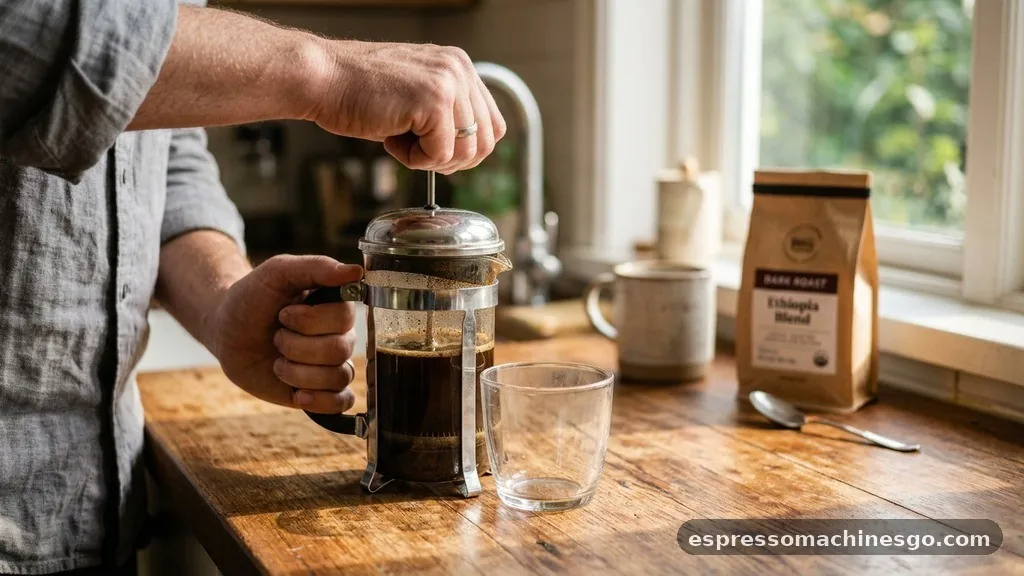
While the French press is typically used for immersion brewing, it can be adapted to produce a very strong concentrate that works well in lattes or americanos. Because it uses a metal mesh filter rather than paper, it allows more of the coffee oils—known as crema-like lipids—to pass into your final beverage. While it lacks the “crema” (the golden foam found on top of a true espresso shot), it provides the necessary intensity.
To simulate an espresso-like brew with this tool, use a much higher coffee-to-water ratio than you normally would. Instead of the standard coarse grind, opt for a medium-fine grind. Steep the coffee for a shorter period, roughly two to three minutes, and then plunge with firm, steady pressure.
By keeping the volume of water low, you ensure that the resulting liquid is potent enough to stand up to steamed milk or hot water additions. This is arguably the easiest way to start experimenting with espresso home brewing if you already own basic kitchen equipment.
Essential Variables for Consistency
Achieving a consistent outcome requires attention to detail. Regardless of the tool you choose, the quality of your coffee beans will be the deciding factor in the final flavor.
Freshly roasted beans, ideally within two to four weeks of their roast date, will produce a much more vibrant and complex cup than stale, pre-ground options. You should also consider the water quality; since coffee is 98% water, using filtered or bottled water will significantly improve the clarity and sweetness of your brew.
| Method | Pressure Level | Grind Size | Prep Difficulty |
|---|---|---|---|
| Moka Pot | Low (Steam) | Fine | Moderate |
| Aeropress | Moderate (Manual) | Fine | Easy |
| French Press | Minimal | Medium-Fine | Easy |
| Manual Pour-Over | None | Medium-Fine | Hard |
Consistency also comes down to the temperature of your water. You want to aim for a range between 195°F and 205°F.
If the water is boiling, you risk scorching the grounds; if it is too cool, you will fail to extract the necessary oils and sugars. Investing in a simple digital thermometer can help you take the guesswork out of the brewing sequence, ensuring that you enjoy a high-quality result every single time you prepare your coffee.
Solving Common Extraction Challenges
One of the biggest hurdles when learning how to make espresso at home without a machine is troubleshooting a cup that tastes either too sour or too bitter. A sour taste usually indicates under-extraction, meaning the water didn’t pull enough flavor out of the grounds. To fix this, try grinding your beans slightly finer or increasing your brew time.
Conversely, a bitter, astringent taste suggests over-extraction. In this case, grind slightly coarser or reduce the amount of time the water spends in contact with the coffee.
Another common gap in knowledge is the “crema” factor. Many people think a shot isn’t espresso without that thick, golden foam. It is important to note that true crema is a byproduct of high-pressure carbon dioxide release, which is only possible with a machine.
When brewing manually, you will likely not get the same thick layer of foam. However, you can achieve a similar mouthfeel by ensuring your beans are very fresh—freshly roasted coffee contains more trapped gases, which can create a light, frothy top layer even in manual methods. Don’t be discouraged if your DIY espresso looks different; focus on the balance of flavor and strength, which are the true hallmarks of a well-prepared espresso coffee.
Frequently Asked Questions
Can I use regular pre-ground coffee to make espresso?
While you can technically use pre-ground coffee, the results will be thin and lack depth. Espresso requires a very fine grind to provide enough resistance for extraction. If you use standard drip-grind coffee, the water will flow through too quickly, resulting in weak, underwhelming coffee.
What is the easiest way to make espresso at home?
The Aeropress is generally considered the easiest and most forgiving method for beginners. It requires minimal cleanup, allows for quick brewing, and provides enough manual pressure to create a concentrated, flavorful shot that works perfectly for lattes or cappuccinos without needing a specialized machine.
Is it possible to get real crema without a machine?
No, true pressurized crema requires 9 bars of force to emulsify coffee oils and CO2. Manual methods like the moka pot or Aeropress create a rich, concentrated liquid with a slight froth, but it will not have the same thick, stable, golden crema as a commercial espresso machine.
How much coffee should I use for a single shot?
A standard single shot of espresso typically uses 7 to 9 grams of coffee. If you are using a manual method, start with about 1.5 to 2 tablespoons of finely ground coffee. Adjust the ratio based on your personal preference for strength and the specific tool you are using.