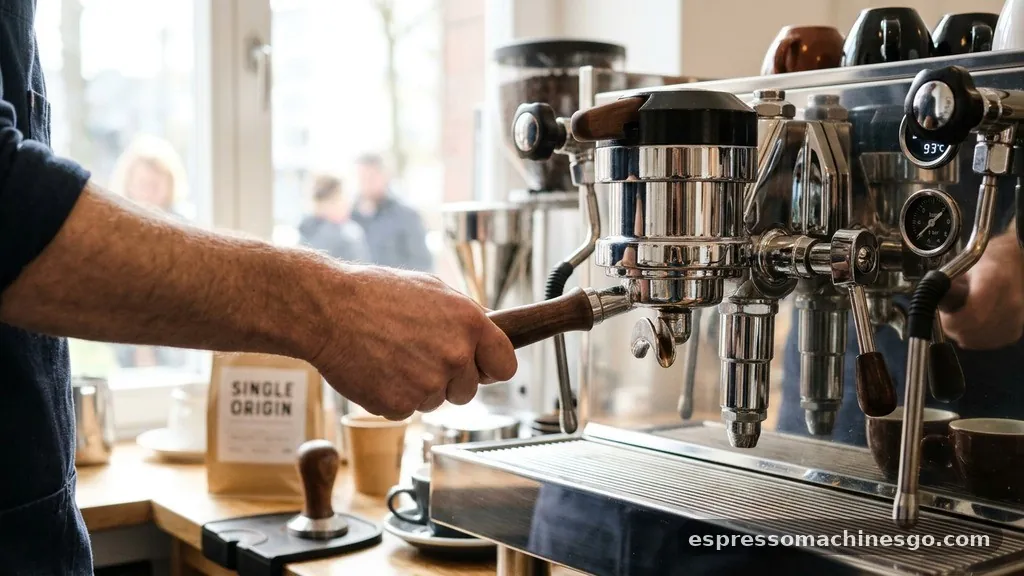
Mastering the art of pulling a perfect shot is a rewarding journey that transforms your kitchen into a personal café. Learning how to use an espresso machine involves more than just pushing a button; it requires an understanding of the delicate balance between physics, chemistry, and sensory perception.
Whether you are using a manual lever machine, a semi-automatic model, or a high-end dual-boiler system, the fundamental principles of barista technique remain the same. By controlling variables such as grind size, tamping, and extraction time, you can pull a rich, syrupy shot of espresso topped with a golden layer of crema every single time.
The Anatomy of Your Espresso Machine
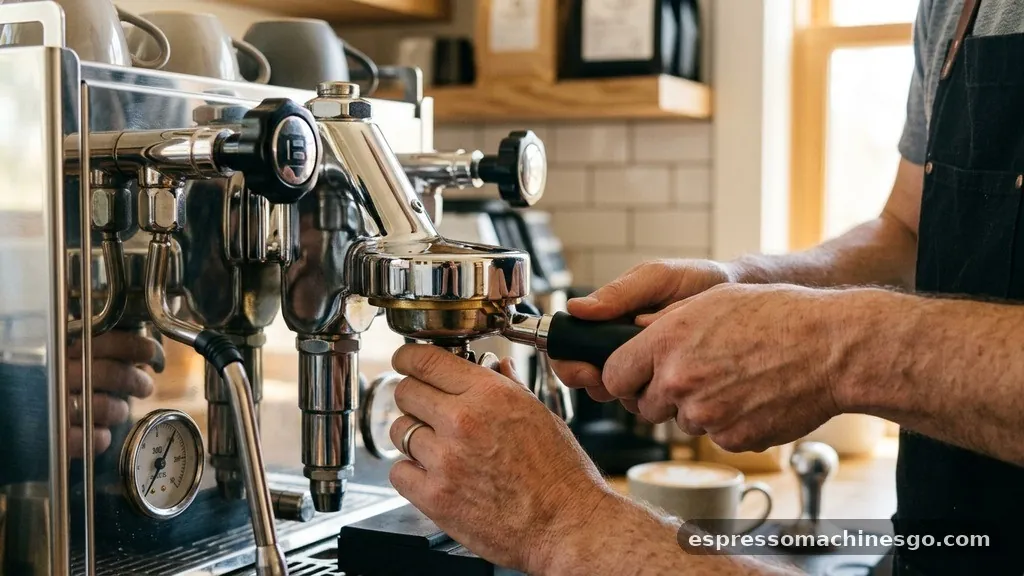
To effectively operate your equipment, you must first understand the core components that facilitate the brewing process. At the heart of the machine is the boiler, which heats the water to the optimal range—typically between 195°F and 205°F. Maintaining the correct water temperature is critical because water that is too cold will result in a sour, under-extracted shot, while water that is too hot will burn the oils, creating an unpleasant bitterness.
The group head is the interface where the portafilter locks into place. It distributes pressurized water evenly across the coffee bed. Most machines feature a pressure gauge that provides real-time feedback on the pump’s performance.
Generally, you want to see the needle hover around 9 bars of pressure during the extraction. If the pressure is too low, the water will rush through the coffee too quickly; if it is too high, the machine may choke.
Familiarizing yourself with these mechanical indicators allows you to troubleshoot issues before they ruin your morning cup. For further reading on the history and physics of coffee extraction, you can visit the National Coffee Association, which provides authoritative insights into brewing standards.
Dialing In: The Importance of Grind Size and Dose Weight
The secret to a perfect espresso shot lies in the preparation of the coffee bed. You should always use fresh coffee beans and a high-quality burr grinder. A blade grinder will produce inconsistent particles, leading to uneven extraction, whereas a burr grinder ensures uniformity.
The grind size for espresso is notoriously fine, often compared to the texture of powdered sugar or fine table salt. If the grind is too coarse, water will bypass the grounds, resulting in a thin, watery beverage.
Dose weight refers to the exact amount of dry coffee grounds placed into the portafilter. While a standard double basket typically holds between 18 and 20 grams, you should adjust this based on your specific machine and the roast profile of your beans. Consistency is the goal here; using a digital scale to weigh your dose down to the tenth of a gram will eliminate guesswork.
Once the grounds are in the basket, ensure they are distributed evenly. A lopsided bed leads to channeling, where water finds the path of least resistance, leaving parts of the coffee under-extracted while over-extracting others.
Tamping and Puck Preparation
Tamping is the physical act of compressing the loose coffee grounds into a dense, uniform cake, known as a puck. This step is vital because it creates the resistance necessary for the pump to force water through the coffee.
You should apply firm, level tamp pressure—usually around 20 to 30 pounds of force—ensuring the surface of the coffee is perfectly flat. If the tamp is slanted, the water will flow unevenly through the puck, ruining the balance of your shot.
Many modern baristas now use distribution tools to level the grounds before tamping. This prevents air pockets and ensures a consistent flow rate across the entire surface. Remember that the goal is not necessarily “hard” tamping, but “even” tamping.
If your machine features a pre-infusion or blooming phase, the water will saturate the puck at low pressure for a few seconds before the full pump kicks in. This helps the coffee swell and release trapped gases, leading to a much smoother, more complex flavor profile.
Managing Extraction Time and Flow Rate
The extraction time is the duration the water spends in contact with the coffee, typically ranging between 25 and 30 seconds for a standard double shot. The brew ratio is another essential concept, which compares the weight of the dry grounds to the weight of the liquid espresso in your shot glass. A common starting point is a 1:2 ratio—for example, 18 grams of dry coffee should yield 36 grams of liquid espresso.
| Extraction Type | Ratio (Dry:Liquid) | Flavor Profile |
|---|---|---|
| Ristretto | 1:1 to 1:1.5 | Intense, syrupy, low acidity |
| Standard Espresso | 1:2 | Balanced, sweet, complex |
| Lungo | 1:3 to 1:4 | Thin, bitter, high caffeine |
Monitoring the flow rate is how you adjust these variables. If your shot pulls too fast (under 20 seconds), your grind is likely too coarse.
If it pulls too slow (over 35 seconds), your grind is likely too fine. By tracking these metrics in a journal, you can quickly “dial in” any new bean you purchase, ensuring every shot you pull tastes optimal.
Mastering Milk Frothing and Microfoam
Beyond the espresso itself, the steam wand is the tool that elevates a simple shot into a latte, cappuccino, or flat white. Milk frothing is a tactile skill that requires practice. Start by submerging the tip of the steam wand just below the surface of the milk.
You want to hear a gentle, paper-tearing sound, which indicates that air is being incorporated to create microfoam. This foam should look like wet, glossy paint, with no visible large bubbles.
Once the milk reaches the desired temperature—usually around 140°F to 150°F—turn off the steam and wipe the wand immediately with a damp cloth. If you let milk dry on the wand, it becomes a breeding ground for bacteria and creates a blockage in the steam tip.
The transition from a “stretching” phase (adding air) to a “texturing” phase (incorporating the air into the milk) is the hallmark of a skilled barista. Developing this muscle memory allows you to pour latte art, which is the final aesthetic touch to your espresso-based beverages.
Essential Maintenance: Descaling and Backflushing
A machine is only as good as the care you provide it. Over time, mineral deposits from your water will accumulate inside the boiler and piping, a process known as scale buildup. Descaling is the process of running an acidic solution through the machine to dissolve these minerals.
Depending on your water hardness, you should perform this maintenance every three to six months. Failure to descale will eventually lead to erratic temperature control and reduced pressure.
Backflushing is equally important for machines with a three-way solenoid valve. This involves using a blind filter—a basket with no holes—to force cleaning detergent through the group head. This process removes old coffee oils and grounds that collect in the dispersion screen and the shower head.
If you neglect backflushing, your coffee will eventually develop a rancid, burnt aftertaste. Consistent cleaning routines not only extend the lifespan of your expensive equipment but also ensure that your coffee tastes clean and vibrant every time you use it.
Common Topical Gaps: Troubleshooting Your Machine
Many beginners struggle with specific, often-overlooked issues. For instance, what happens if your machine is leaking from the group head? This is frequently caused by a worn-out group gasket, which is a rubber ring that creates a seal with the portafilter.
Replacing this annually is a standard maintenance task. Another common issue is “sour” shots.
This is often not a mechanical failure but a result of under-extraction. Try increasing your brew temperature or using a slightly finer grind setting.
If you find that your coffee tastes “ashy” or overly bitter, you are likely over-extracting. Try shortening the shot time or using a slightly coarser grind.
Finally, if you are using a machine with a pressurized portafilter (common on entry-level models), keep in mind that it will never produce the same level of complexity as a professional-grade, non-pressurized portafilter. These devices use a small valve to create artificial pressure, which is helpful for beginners but limits your ability to truly dial in a specific roast.
Frequently Asked Questions
- How much coffee do I use for 1 cup of espresso? Generally, a double shot requires 18 to 20 grams of finely ground coffee. If you are using a single basket, 7 to 9 grams is the standard, though single shots are notoriously more difficult to pull consistently than double shots.
- How do I fix a shot that pulls too fast? If your extraction is too quick, your grind size is likely too coarse. Adjust your grinder to a finer setting to increase resistance. Additionally, ensure you are using enough coffee and tamping with consistent, firm pressure to slow down the water flow.
- Why does my espresso lack crema? A lack of crema usually indicates that your coffee beans are stale or the roast is too light. Freshly roasted beans, ideally used within two to four weeks of their roast date, are essential for producing the thick, persistent foam characteristic of a high-quality espresso.
- Is backflushing necessary for all machines? No. Backflushing is only required for machines equipped with a three-way solenoid valve, which allows the machine to release pressure after the shot. If your machine does not have this valve, focus on cleaning the portafilter and shower screen manually after every use.