
Finding the perfect setup for your kitchen requires balancing technical specifications with your personal daily rituals. Determining what is the best at home espresso machine involves more than just picking a brand; it requires an evaluation of your technical skill, your available counter space, and how much time you are willing to dedicate to the craft of pulling a perfect shot. Whether you are a casual enthusiast seeking a quick morning caffeine fix or a dedicated hobbyist looking to master the art of micro-foam, the market offers a diverse range of hardware designed to suit every level of expertise.
Understanding the Mechanics of Espresso Extraction
At its core, an espresso machine is a pressurized water delivery system. To extract the complex oils and solids from ground coffee, the system must maintain consistent pressure—ideally around nine bars—and precise temperature control.
When you ask what is the best at home espresso machine, you are essentially asking which piece of equipment provides the most stability. A boiler that fluctuates in temperature will result in sour or burnt-tasting shots, regardless of the quality of your beans.
For those who are serious about their morning routine, understanding the difference between thermoblock heating and traditional boilers is vital. Thermoblocks are quick to heat up, which is ideal for busy mornings, but they often lack the thermal mass needed for back-to-back shots. Conversely, machines with dedicated boilers offer superior heat retention and stable steam pressure.
If you are preparing milk-based drinks like lattes or cappuccinos, the power of your steam wand becomes just as important as the extraction quality. A machine with a dedicated steam boiler or a high-performance heat exchanger will allow you to texture milk while simultaneously pulling your shot, saving you significant time.
The Beginner Path: Ease of Use and Consistency
For beginners, the priority is usually reducing the learning curve without sacrificing cup quality. The Bambino Plus is frequently cited as a top contender because it automates the most difficult part of the process: milk texturing. While manual steaming is a rewarding skill, having a machine that can produce cafe-quality micro-foam at the touch of a button is a game-changer for those still learning to dial in their grind size.
When you invest in a machine like this, you are buying into a system designed for accessibility. It handles the pre-infusion phase—soaking the grounds before applying full pressure—which helps prevent channeling and uneven extraction.
This level of automation is perfect for users who want a professional result without the multi-year learning curve associated with manual lever machines. Remember that even the best machine cannot compensate for stale beans; always prioritize fresh, high-quality roasts to ensure your equipment performs at its peak.
Mid-Range Performance and Mechanical Mastery
Stepping up from entry-level appliances, you enter the territory of the Gaggia Classic and the Classic Pro. These machines are legendary in the home brewing community precisely because they are simple, durable, and highly modifiable.
Unlike modern appliances that rely heavily on digital menus and proprietary software, these units use simple mechanical switches. This makes them significantly easier to repair if something goes wrong.
If you are looking for long-term value, consider the availability of parts and the level of service provided by the manufacturer. A machine that is easy to maintain will outlive a complex, digitally-integrated appliance that becomes obsolete the moment a circuit board fails.
By investing in a platform that has a robust aftermarket community, you can upgrade your pressure gauge, change your steam wand, or even add a PID controller for digital temperature stability. This modularity is why many enthusiasts consider the classics to be the best investment for long-term use.
High-End Luxury and Professional Standards
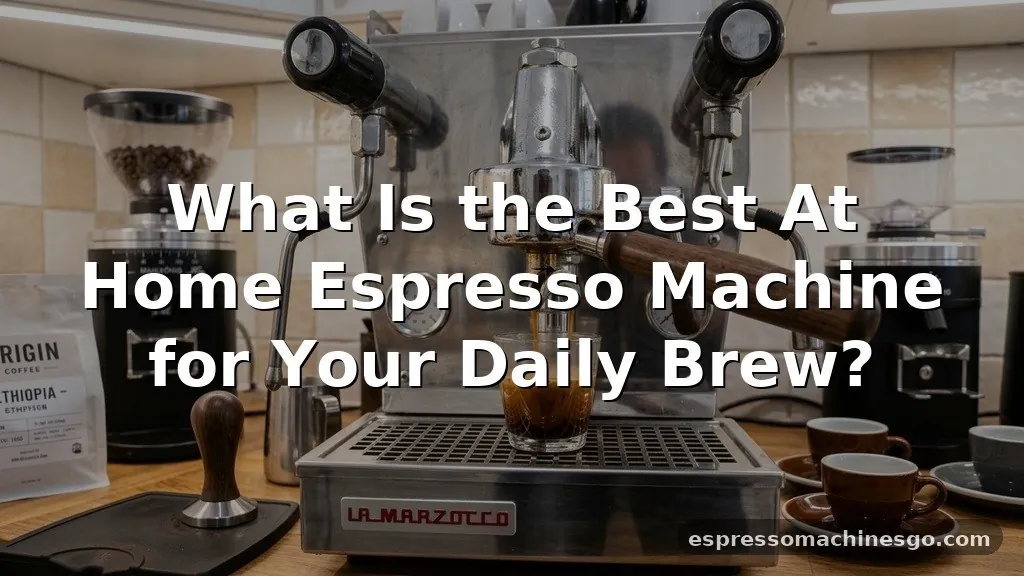
For the home barista who refuses to compromise, the conversation shifts toward high-end equipment like the Marzocco Linea or the refined engineering of Rocket Espresso and Lelit. These machines are designed to provide the same level of performance you would expect in a high-volume commercial cafe. They feature heavy-duty rotary pumps, massive boilers, and stainless steel construction that feels substantial and precise.
When you move into this price bracket, you are paying for thermal stability and pressure profiling capabilities. These machines allow you to manipulate the water flow throughout the extraction process, which is essential if you are working with light-roast specialty coffees that require specific flow rates to highlight their delicate acidity.
While the costs associated with these machines are significantly higher, the performance gap is noticeable. They provide a level of consistency that allows you to treat your kitchen like a professional laboratory, ensuring that every shot you pull is identical to the last.
Essential Accessories for the Home Barista
A machine is only as good as the accessories you pair with it. Many people make the mistake of spending their entire budget on the machine while neglecting the most important component: the grinder.
Without a high-quality burr grinder capable of producing a consistent particle size, even a five-thousand-dollar machine will struggle to pull a decent shot. You need a grinder that allows for micro-adjustments, as even a tiny shift in setting can drastically change the taste of your espresso.
Beyond the grinder, you should invest in a high-quality tamper, a precision basket, and a bottomless portafilter. The bottomless portafilter is an indispensable training tool because it allows you to observe the extraction process in real-time. If you see spurting or uneven flow, you know immediately that your puck preparation—either your distribution or your tamping—needs work.
| Machine Category | Primary User | Maintenance Level |
|---|---|---|
| Entry-Level | Beginners/Busy Professionals | Low |
| Prosumer/Classic | Hobbyists/DIY Enthusiasts | Moderate |
| Commercial-Grade | Serious Baristas/Connoisseurs | High |
Addressing Common Misconceptions and Gaps
One common gap in the current discourse regarding home espresso is the over-emphasis on the machine itself while ignoring the importance of water chemistry. The mineral content in your water drastically affects the flavor of your coffee and the longevity of your machine.
Using water that is too hard will lead to scale buildup in your boiler, which is the leading cause of premature failure in home machines. Always use filtered water or a dedicated water softening system to protect your investment.
Another point of confusion is the “brand loyalty” trap. Many consumers ask if one brand is inherently better than another. In reality, the best machine is the one that aligns with your specific workflow.
If you prefer a quick morning routine, a Breville machine with an integrated grinder might be your best choice. If you prefer a Victoria-style manual machine that requires a hands-on approach, you will find more joy in a machine that demands your full attention.
Do not get caught up in the sales marketing of specific brands; instead, look at the technical specifications, such as pump type, boiler size, and heat-up time. For more technical details on standard espresso definitions, you can review the Specialty Coffee Association standards to understand what constitutes a perfect cup.
- Assess your daily volume: How many shots do you pull per day?
- Evaluate your space: Ensure your counter can handle the footprint and height.
- Prioritize the grinder: Never cut corners on your bean-crushing hardware.
- Consider maintenance: Look for machines with available, affordable replacement parts.
- Learn the craft: Use a bottomless portafilter to diagnose your extraction technique.
Frequently Asked Questions
Is a more expensive espresso machine always better?
Not necessarily. While high-end machines offer better thermal stability and longevity, they require more skill to operate. If you want convenience, an entry-level machine with automated features will provide a better experience than a complex manual machine that you find too tedious to use daily.
How often should I clean my espresso machine?
You should perform a quick backflush after every session and a deep chemical clean every few weeks. Regular maintenance prevents the buildup of coffee oils, which turn rancid and ruin the flavor of your shots, and helps prevent blockages in the group head and internal valves.
Can I use a standard kitchen grinder for espresso?
Generally, no. Espresso requires a very fine, consistent grind that standard blade grinders cannot achieve. You need a dedicated burr grinder capable of making micro-adjustments to dial in the perfect shot. Using the wrong grinder will result in uneven extraction and poor-tasting, watery espresso.
What is the most important factor in a good shot?
Consistency is the most important factor. This involves using fresh coffee beans, a high-quality burr grinder, and filtered water, while maintaining a stable temperature and pressure. When these variables are controlled and kept consistent, you can replicate high-quality cafe results in your own kitchen every single morning.