


Maintaining a high-quality home brewing station requires more than just premium beans and a steady hand; it demands rigorous care for the internal mechanics of your equipment. When you learn how to descale the breville espresso machine, you are essentially extending the lifespan of your pump, heating element, and boiler. Over time, mineral deposits—primarily calcium and magnesium—accumulate within the internal water pathways.
This buildup, known as limescale, acts as an insulator, preventing the machine from reaching its optimal brewing temperature and clogging the fine mesh of the shower screen. By establishing a consistent descaling routine, you ensure that every shot of espresso remains rich, aromatic, and free from the bitter metallic aftertaste caused by mineral degradation.
Understanding the Importance of Regular Descaling
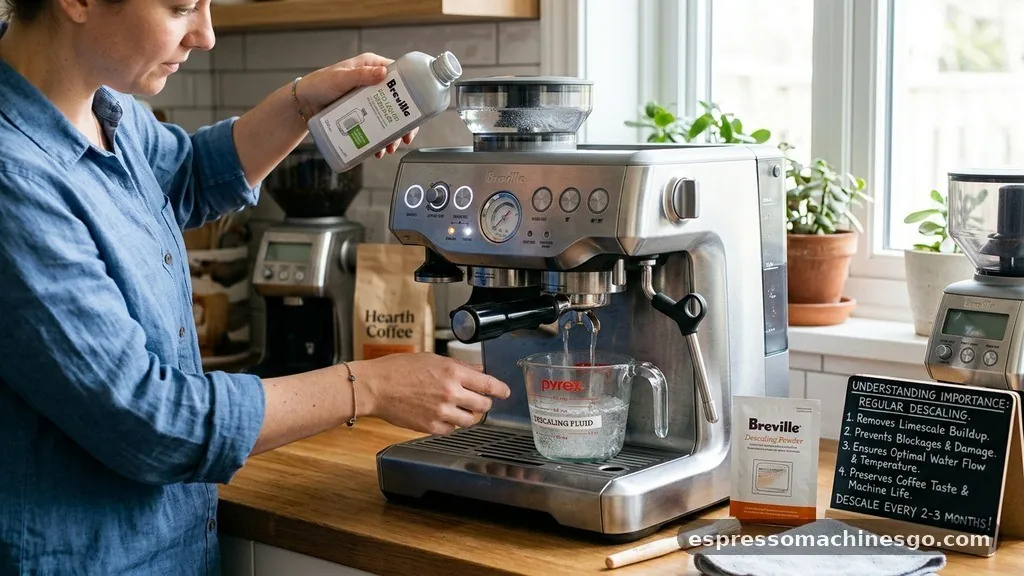
The primary reason for performing a descaling cycle is the chemical nature of tap water. Depending on your local water supply, you may have “hard” water, which is rich in dissolved minerals. When water is heated inside the thermocoil or boiler system of your Breville, these minerals precipitate out of the solution and solidify onto the metal surfaces.
This process is accelerated by the high-pressure environment required for pulling a perfect shot. If left unchecked, this calcification can lead to a significant drop in pressure, inconsistent water flow, and eventually, a total blockage that requires professional repair.
Beyond the mechanical risks, the quality of your coffee is directly tied to the cleanliness of your machine. Limescale buildup can harbor bacteria and create a flavor profile that is dull or sour. By removing these deposits, you restore the integrity of the water path, allowing the machine to operate at the manufacturer’s specified pressure and temperature.
Most modern Breville models, such as the Barista Express or the Oracle, feature built-in notification systems that alert you when the mineral concentration reaches a critical threshold. Ignoring these alerts is a common mistake that leads to premature equipment failure.
Preparation and Required Supplies
Before you begin the cleaning process, you must gather the correct materials to avoid damaging the internal components. It is strongly recommended that you use a specialized espresso machine descaling solution rather than household vinegar.
While vinegar is a popular DIY cleaner, it is highly acidic and can leave a lingering odor that ruins the taste of your coffee for weeks. Furthermore, the rubber gaskets and O-rings inside high-end espresso machines are sensitive to the harsh acids found in vinegar, which can cause them to dry out or crack prematurely.
You will need a container large enough to hold at least two liters of water, as the descaling process involves cycling significant volumes through the group head and the steam wand. Ensure you have access to fresh, filtered water, as using the same hard water that caused the problem will only delay the inevitable.
If your machine uses an in-tank water filter, you must remove it before starting the descaling cycle, as the solution can damage the filter’s ion-exchange resin. Having a microfiber cloth on hand is also helpful for wiping down the exterior and catching any accidental spills during the flushing phase.
Executing the Descaling Procedure Step-by-Step
The specific steps for descaling can vary slightly depending on your model, but the core process remains consistent across the Breville lineup. Start by powering off the machine and allowing it to cool down, especially if you have been steaming milk. Empty the drip tray and the water reservoir completely.
Mix your descaling solution with warm water according to the manufacturer’s instructions, typically found on the bottle or in the user manual. Fill the reservoir to the ‘DESCALE’ line with this mixture.
Once the reservoir is reinserted, you must enter the machine’s maintenance mode. On most Breville models, this involves holding down specific combinations of buttons—usually the ‘Power’ and ‘One-Cup’ or ‘Two-Cup’ buttons simultaneously while turning the machine on. Once the machine enters the mode, you will initiate the flow through the group head.
You should place your large container under the group head and open the steam wand valve to allow the solution to travel through both pathways. Repeat this process, allowing the machine to rest for a few minutes between cycles to let the solution break down the mineral deposits effectively. You can learn more about the chemistry of water hardness by visiting the United States Geological Survey for detailed insights on mineral content.
The Critical Importance of the Rinse Cycle
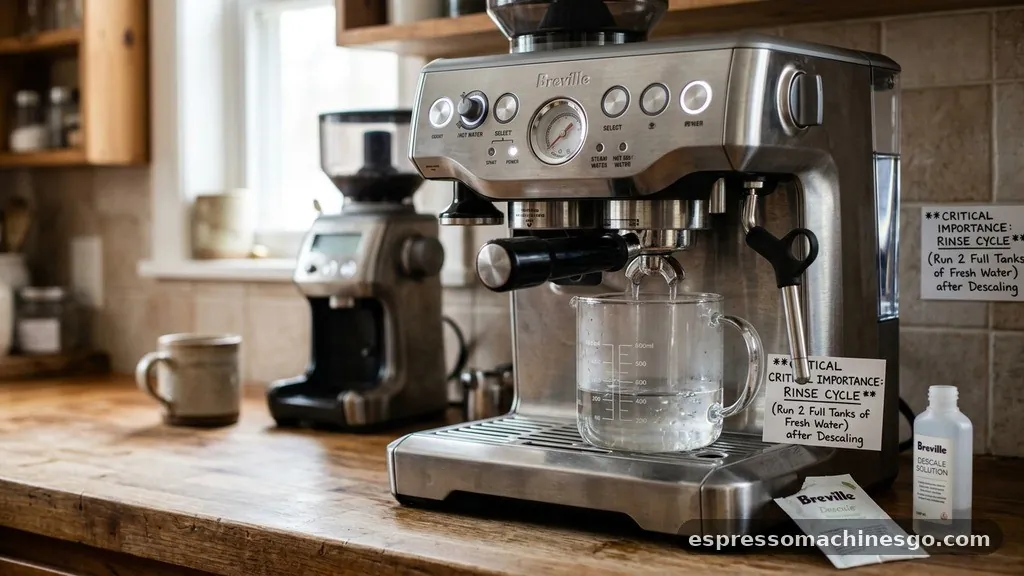
After the descaling solution has been processed through the machine, you must perform a thorough rinse. This stage is often overlooked, but it is vital for ensuring that no chemical residue remains in the internal plumbing.
If you skip this step, your next few espressos will have a distinct, unpleasant chemical tang. Empty the reservoir, rinse it thoroughly with clean water, and fill it to the maximum capacity with fresh, cold, filtered water.
Run this fresh water through the group head and the steam wand until the reservoir is completely empty. It is often beneficial to repeat the rinse cycle twice to guarantee that the internal pipes are fully flushed. During the rinse, observe the output; if you notice any white flakes, these are remnants of the descaled minerals being pushed out.
Continue rinsing until the water runs completely clear and shows no signs of debris. Once finished, reattach your water filter (or install a fresh one) and prime the pump to ensure the lines are pressurized and ready for daily use.
Addressing Common Troubleshooting and Topical Gaps
Many users encounter issues during the descaling process, such as the machine failing to exit the maintenance mode or the pump sounding unusually loud. If the pump is making a chattering noise, it may indicate that an airlock has formed in the system.
To resolve this, ensure the water reservoir is seated firmly and that there is enough water to maintain a constant flow. If the machine remains stuck in the descaling mode, turn it off, unplug it for ten minutes, and restart the process from the beginning.
Another common gap in knowledge is the frequency of descaling. While machines provide alerts, you should adjust your schedule based on your usage and water quality. If you brew multiple drinks a day, you are cycling more water through the system, meaning mineral buildup will occur faster.
Furthermore, users often forget to descale the steam wand specifically. The steam wand accumulates minerals differently due to the high-heat evaporation process, so ensure you are flushing it as much as the group head. Consider using a descaling frequency table to track your maintenance:
| Water Hardness Level | Usage Frequency | Recommended Descaling Interval |
|---|---|---|
| Soft | Low (1-2 cups/day) | Every 6 months |
| Moderate | Medium (3-5 cups/day) | Every 3 months |
| Hard | High (6+ cups/day) | Every 4-6 weeks |
Preventative Maintenance and Best Practices
Beyond the periodic deep clean, you can significantly reduce the need for aggressive descaling by adopting a preventative mindset. The most effective tool at your disposal is the use of softened or filtered water.
Investing in a high-quality pitcher filter or an under-sink reverse osmosis system will strip the minerals from your water before they ever enter the machine. By starting with “clean” water, you drastically increase the duration between required descaling sessions, protecting the delicate internal pump from unnecessary wear.
Daily habits also play a major role in long-term machine health. Always perform a “blank shot”—running a cycle without coffee—before and after your brewing session. This flushes out any stray coffee grounds that might be sitting in the group head.
Additionally, purging the steam wand for three seconds before and after steaming milk prevents milk solids from being sucked back into the wand, which can cause blockages that are separate from mineral buildup. Maintaining a clean machine is a proactive approach to quality control, ensuring that your investment continues to produce café-standard results for years to come.
- Use filtered water to minimize calcium deposits at the source.
- Replace the water filter every two to three months as recommended by Breville.
- Wipe down the steam wand immediately after every use to prevent milk buildup.
- Perform a blank shot to keep the group head clean and the temperature stable.
- Do not ignore the alert; descaling promptly prevents permanent damage to the heating element.
Frequently Asked Questions
How often should I descale my Breville?
You should descale your machine every 1 to 3 months depending on your water hardness and usage frequency. If you live in an area with very hard water or brew multiple times daily, you may need to descale as often as every month to prevent mineral buildup.
Can I use white vinegar to descale my machine?
It is strongly advised against using white vinegar. Vinegar is highly acidic and can corrode the internal rubber seals, gaskets, and even some metal components. Furthermore, it leaves a lingering taste that is difficult to remove, which will negatively affect the flavor of your espresso for many sessions.
What if my machine is still making noise after descaling?
If the machine remains loud, it may have an airlock or a persistent clog. Ensure the water tank is properly seated and try running a few more cycles of fresh water through the steam wand. If the noise persists, it could indicate a mechanical failure requiring professional technical service.
Do I need to remove the water filter before descaling?
Yes, you must remove the water filter before starting the descaling process. The descaling solution can damage the ion-exchange resin inside the filter, rendering it ineffective. Always discard the old filter and install a fresh one after the entire descaling and rinsing procedure is complete.
In summary, mastering the maintenance of your espresso equipment is a fundamental aspect of the home barista experience. By understanding how to descale the breville espresso machine effectively, you protect your machine’s internal architecture, ensure consistent extraction, and preserve the delicate flavor profiles of your favorite coffee beans. While the process requires patience and attention to detail, the reward is a reliable machine that performs at its peak, providing you with high-quality espresso every single morning.