
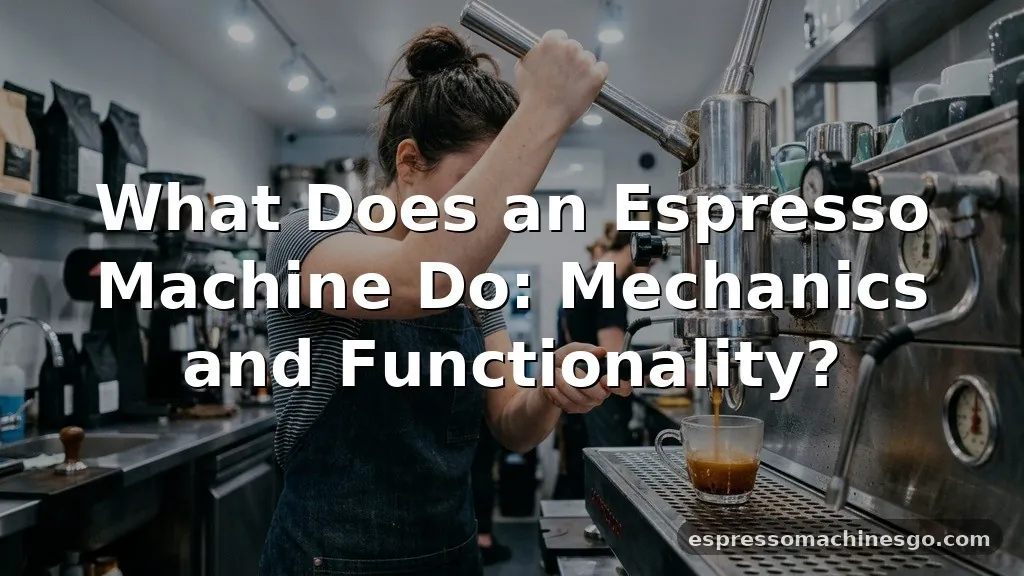
At its core, an espresso machine is a precision-engineered piece of equipment designed to extract the concentrated essence of coffee through a high-pressure infusion process. Unlike standard drip coffee makers that rely on gravity and atmospheric pressure to trickle water through a bed of grounds, these machines utilize force to push hot water through a tightly packed puck of finely ground coffee.
This specialized mechanical action transforms simple beans into a rich, syrupy liquid topped with a golden layer of foam known as crema. By understanding the intricate synergy between temperature, pressure, and flow, you can begin to see why this device is considered the heart of any professional or home coffee setup.
The Fundamental Mechanics of Pressure and Extraction
The primary function of an espresso machine is the application of controlled pressure during the brewing cycle. In the world of coffee science, pressure is the catalyst that allows for the rapid extraction of soluble solids, oils, and aromatics that are otherwise difficult to access via traditional infusion methods. Most modern pump-driven machines are calibrated to reach approximately nine bars of atmospheric pressure, which is roughly equivalent to the force found deep beneath the ocean surface.
When you engage the machine, a motorized pump draws water from a reservoir or direct line and forces it through the internal plumbing toward the group head. This is where the magic happens: the water must be heated to a precise temperature—typically between 195 and 205 degrees Fahrenheit—before it hits the coffee. Because the coffee is ground to a fine consistency and compressed into a portafilter, the water encounters significant resistance.
This resistance is exactly what creates the “espresso effect.” The high-pressure environment emulsifies the coffee oils, resulting in a thick, full-bodied shot that carries a much higher concentration of flavor than standard filter coffee. Without this specific application of force, the result would be weak and lacking the signature texture that defines a true espresso.
Internal Components and the Role of the Boiler
To appreciate what an espresso machine does, one must look at the internal anatomy, specifically the boiler system. The boiler is the engine room of the appliance, responsible for maintaining the thermal stability required for consistent extraction. Whether a machine uses a single boiler, a heat exchanger, or a dual-boiler configuration, the goal remains the same: to provide a steady supply of hot water and, in many cases, dry steam for milk texturing.
In a commercial or high-end home setup, the boiler acts as a heat reservoir. As water through the system passes over or around the heating elements, it gains the energy needed to facilitate the extraction. If the temperature fluctuates even by a few degrees, the resulting flavor profile can shift from sweet and balanced to sour or bitter.
This is why the design of the boiler is so critical. A stable thermal environment ensures that every extraction is repeatable.
Furthermore, the steam generated within the boiler is diverted to a steam wand, allowing the user to introduce air into milk, creating the micro-foam necessary for lattes and cappuccinos. This dual-purpose utility—brewing coffee and steaming milk—is what distinguishes these machines from simple coffee brewers.
The Importance of the Portafilter and Group Head
The interface between the machine and the user is primarily facilitated by the portafilter and the group head. The portafilter is the handle-mounted basket where the grounds are placed.
Once the user levels and tamps the coffee, the portafilter is locked into the group head, creating a sealed, pressurized chamber. This seal is vital; if the connection is loose, the water will find the path of least resistance, leading to channeling and an uneven, watery extraction.
The group head itself is often a heavy, metallic component that acts as a heat sink. By maintaining a consistent temperature at the point of entry, the group head ensures that the water does not lose its thermal energy the moment it touches the cold coffee puck. In professional settings, you will often see machines where the group head is saturated, meaning it is physically attached to the boiler for maximum heat retention.
This level of engineering is what allows a barista to pull dozens of shots in a single hour with identical results, a hallmark of reliable espresso machines. You can find more details on the technical standards for coffee preparation at the National Coffee Association.
Comparing Espresso Extraction to Standard Brewing
Many people wonder about the functional difference between an espresso maker and a standard drip brewer. While both use coffee beans, the process is fundamentally different. A standard coffee maker is designed for infusion, where water slowly drips through a bed of medium-coarse grounds over several minutes.
The goal here is a clean, lighter-bodied cup of coffee. In contrast, an espresso machine is designed for rapid extraction under extreme conditions.
The following table summarizes the key differences between these two common methods:
| Feature | Espresso Machine | Drip Coffee Maker |
|---|---|---|
| Extraction Method | High-pressure infusion | Gravity-fed drip |
| Grind Size | Very fine | Medium-coarse |
| Brew Time | 25 to 30 seconds | 4 to 6 minutes |
| Key Output | Concentrated shot | Standard coffee carafe |
As shown in the table, the espresso machine is built for speed and intensity. The use of fine grounds increases the surface area exposed to the water, and the pressure ensures that even with a short contact time, the maximum amount of flavor is pulled from the bean.
The Evolution from Manual Piston to Automatic Pump
The history of the espresso machine is a story of technological advancement. Early models were entirely manual, relying on a lever-operated piston to physically force water through the coffee. These manual machines required immense skill and strength from the operator, as the barista had to manually control the pressure profile throughout the entire extraction.
Today, most machines are pump-driven, utilizing electric vibration or rotary pumps to automate the pressure delivery. This shift has made the process more accessible for the home user. Modern machines can now manage their own pressure profiles, pre-infusion stages, and even water flow rates.
Despite this automation, the core principle remains identical to the original invention: using mechanical force to extract a concentrated beverage. Whether you are using a basic entry-level model or a top-tier professional setup, the machine is essentially a tool for managing the variables of coffee chemistry—time, temperature, and pressure—to create a consistent, high-quality beverage every time.
Addressing Topical Gaps: Beyond the Shot
A common misconception is that an espresso machine is only for pulling a single shot of espresso. In reality, these machines are versatile platforms for a wide range of beverages. Because the machine provides both high-pressure water and pressurized steam, it serves as a complete beverage station.
- Americano: A shot of espresso diluted with hot water, mimicking the strength of drip coffee but with a different flavor profile.
- Latte: A shot of espresso combined with steamed milk and a thin layer of micro-foam.
- Cappuccino: A balanced drink consisting of equal parts espresso, steamed milk, and airy milk foam.
- Macchiato: A shot of espresso “stained” with a small dollop of steamed milk.
- Mocha: A latte enhanced with chocolate syrup or cocoa powder.
Understanding these variations helps clarify why the machine is such a staple in cafes. It is not just about the coffee itself, but the ability to transform that coffee into a variety of textures and strengths.
The machine acts as a conduit for creativity, allowing the user to adjust the ratio of coffee to milk, the texture of the foam, and the concentration of the drink. This versatility is the primary reason why, even with the rise of alternative brewing methods, the espresso machine remains the gold standard in the coffee industry.
FAQ: Common Questions About Espresso Machines
Do you really need an espresso machine to make coffee?
No, you do not need one to make coffee. Standard drip brewers, French presses, or pour-over devices are excellent for making regular coffee. However, if you specifically want the concentrated, syrupy texture and high intensity of a true espresso shot, an espresso machine is essential.
Is there a difference between an espresso machine and a coffee maker?
Yes, they differ primarily in pressure and extraction time. Espresso machines use high-pressure pumps to force water through fine grounds in seconds, creating a concentrated shot. Coffee makers rely on gravity to slowly drip water through coarser grounds, resulting in a larger volume of lighter-bodied coffee.
Can you drink espresso by itself?
Absolutely. Espresso is designed to be a standalone beverage, prized for its complex flavor profile, rich body, and crema. While many people enjoy it as a base for milk-based drinks like lattes, many enthusiasts prefer to enjoy it black to appreciate the nuances of the roast and origin.
What does a Nespresso machine do differently?
A Nespresso machine is a capsule-based system that automates the espresso process. It uses pre-packaged pods containing pre-ground coffee. While it mimics the pressure-based extraction of a traditional espresso machine, it offers more convenience and consistency at the cost of the granular control provided by a manual or semi-automatic machine.