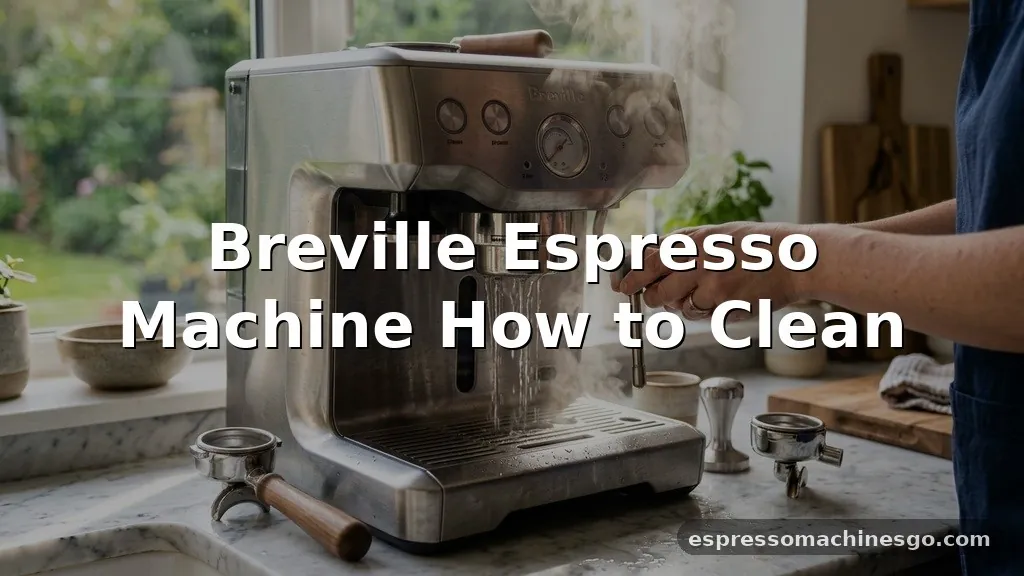
Maintaining your Breville espresso machine is the most essential factor in ensuring that every shot you pull at home delivers the rich, nuanced taste expected from specialty coffee. Over time, mineral deposits from water and oily residues from coffee beans accumulate within the internal components, which can obstruct water flow and impart an unpleasant, bitter flavor to your morning brew.
Learning how to properly manage your machine clean routine is not just about hygiene; it is about protecting your investment and ensuring that your equipment serves you for years to come. Whether you are using a Barista Express, a Pro, or a Oracle model, understanding the nuances of the maintenance cycle is the key to becoming a true barista in your own kitchen.
The Daily Maintenance Ritual for Optimal Performance
Consistency is the secret to a high-performing coffee station. After you finish pulling your shots, there are several habits you should adopt to keep machine performance at its peak. Every time you finish brewing, you should perform a quick purge of the group head.
By running a short burst of hot water through the group head without the portafilter attached, you flush out loose coffee grounds and oils that would otherwise bake onto the shower screen. This simple step prevents the buildup of old coffee debris, which is the primary culprit behind sour or rancid-tasting shots.
Furthermore, the steam wand requires immediate attention after every use. Milk proteins can harden rapidly, creating a breeding ground for bacteria and clogging the internal airflow of the wand. Always purge the wand by releasing steam for a few seconds immediately after frothing, and then wipe the exterior with a damp, dedicated cloth.
If you notice milk buildup on the tip, use the provided cleaning tool to ensure the steam holes remain unobstructed. Neglecting these daily tasks forces the machine to work harder, potentially leading to pressure fluctuations and uneven extraction. By making these actions a reflexive part of your workflow, you significantly reduce the frequency with which you need to perform a deep, intensive cycle.
Understanding the Importance of the Cleaning Cycle
The automatic cleaning cycle is a feature designed by Breville to tackle the accumulation of coffee oils inside the solenoid valve and the group head. Most modern Breville models feature a dedicated light or notification that indicates when it is time to perform this procedure. You should never ignore this warning, as the buildup of oils can eventually restrict water flow, leading to inconsistent pressure and, in extreme cases, damage to the internal pump.
To initiate the cycle, you will typically need a cleaning disc and a specialized cleaning tablet. The process involves placing the tablet into the disc, inserting it into the portafilter, and locking it into the group head. Once you engage the machine’s cleaning mode, it will pump hot water through the system in short bursts, emulsifying the oils and flushing them out through the drainage system.
This process is highly effective because it reaches areas that manual scrubbing cannot. If you find yourself in a situation where you are out of official tablets, you might wonder if there is an alternative.
While some users inquire about using vinegar, it is generally recommended to stick to the manufacturer’s pH-balanced tablets to avoid damaging the internal seals. You can learn more about the chemistry of water quality and its impact on equipment at the National Coffee Association.
Deciphering the Descaling Process for Longevity
While the cleaning cycle addresses coffee oils, descaling is a different process entirely, focused on removing mineral scale caused by calcium and magnesium in your tap water. Even if you use a water filter inside the water tank, minerals will eventually settle in the boiler and the internal tubing. If left unaddressed, this scale acts as an insulator, preventing the machine from heating water to the correct temperature, which ruins the extraction process.
The descaling frequency depends heavily on the hardness of your local water supply. If you live in an area with “hard” water, you will likely need to descale more often than someone in a soft-water region. The process involves running a descaling solution through the entire system, including the hot water spout and the steam wand.
It is a more involved process than the standard cleaning cycle, but it is essential for the longevity of your espresso machine. When the machine prompts you to descale, ensure you follow the steps outlined in your specific manual, as the procedure can vary slightly between models like the Barista Pro and the Oracle.
Comparing Maintenance Procedures
To help you keep track of your maintenance schedule, the following table summarizes the different types of care your machine requires.
| Task | Frequency | Purpose |
|---|---|---|
| Group Head Purge | After every shot | Removes loose grounds and oils |
| Steam Wand Wipe | After every milk froth | Prevents bacteria and milk buildup |
| Cleaning Cycle | When prompted by light | Flushes oils from the solenoid valve |
| Descaling | Every 2-3 months | Removes mineral/calcium scale |
Managing the Water Tank and Filtration System
The water tank is often the most overlooked part of the maintenance routine. Because it holds the water that eventually becomes your espresso, it must be kept pristine.
Stagnant water can develop biofilm, which alters the taste of your coffee and introduces unwanted microorganisms into the brewing process. It is a good practice to empty and rinse the water tank once a week with mild dish soap and warm water, ensuring it is completely dry before refilling.
In addition to the tank, the water filter is a critical component that requires regular replacement. Most Breville machines utilize an activated charcoal filter that sits within the tank. These filters are not permanent; they typically last for about two months of regular use.
If you do not replace the filter on time, it will stop removing chlorine and other impurities, which will eventually make their way into your boiler and contribute to scale buildup. By keeping a spare filter on hand, you ensure that your water quality remains consistent, which is a major factor in achieving that perfect, balanced cup of espresso.
Addressing Topical Gaps: Troubleshooting Common Cleaning Issues
Many users encounter specific issues that aren’t always covered in basic manuals. One common concern is what to do if the cleaning light remains on after you have performed a cycle.
This often happens because the machine did not complete the full cycle due to a temporary power interruption or because the portafilter was not seated correctly. If this happens, try running the cycle again, ensuring the water tank is full and the machine is fully warmed up.
Another frequent gap in knowledge involves the group head screen. Over time, the fine metal mesh on the screen can become clogged with fine coffee particles that even the cleaning cycle cannot remove. If you notice that your extraction pressure is inconsistent or the flow is uneven, it may be time to remove the shower screen using a screwdriver and scrub it manually with a small brush.
This is a simple task that can make a massive difference in the quality of your espresso. Always ensure you are using the correct tools to avoid scratching the metal surface, which could harbor more coffee oils in the future.
Essential Tools for Your Cleaning Kit
Building a dedicated cleaning kit will make the process much smoother and more efficient. Having everything you need in one place encourages you to perform maintenance when it is due rather than putting it off. A complete kit should include:
- A stiff-bristled brush specifically designed for the group head.
- A dedicated microfiber cloth for wiping down the exterior and the steam wand.
- A supply of official Breville cleaning tablets.
- A descaling solution approved for espresso machines.
- A small pick tool for clearing the holes in the steam wand tip.
- Replacement water filters for the tank.
By keeping these items organized in a drawer near your coffee machine, you remove the friction associated with cleaning. When you treat your machine with the same respect as a professional barista would, you will find that the results in the cup are significantly better.
The next time you pull a shot, notice how much better the extraction flows when the machine is properly maintained. It is a tangible reward for the effort you put into keeping your equipment in top shape.
Frequently Asked Questions
How often should I run the cleaning cycle?
You should run the cleaning cycle whenever the machine’s “Clean Me” light illuminates. This typically happens every 200 shots or so, depending on your usage. It is vital to perform this as soon as the light appears to prevent coffee oil buildup from affecting your machine’s pressure.
Can I clean my machine with vinegar?
While some people use white vinegar for descaling, it is generally discouraged because it is difficult to rinse out completely and can leave a lingering acidic taste. Official descaling solutions are specifically formulated to be effective and easy to flush, ensuring your coffee flavor remains neutral and clean.
What happens if I skip the descaling process?
Skipping descaling leads to mineral scale buildup inside the boiler and internal pipes. This causes the machine to struggle with heating, resulting in lukewarm espresso. Over time, the scale can permanently clog the internal valves, leading to costly repairs or the need for a complete machine replacement.
How do I know if my steam wand is clogged?
If you notice that the steam pressure is significantly weaker than usual or if the steam is sputtering, your wand is likely clogged. Use the cleaning tool provided with your machine to gently clear the holes at the tip. If the problem persists, soak the tip in hot water.