

Maintaining your espresso equipment is the single most important factor in ensuring your morning coffee tastes like the work of a professional barista. If you are wondering how to deep clean Breville espresso machine models, you are likely noticing a decline in extraction quality or perhaps a stubborn light blinking on your interface.
Over time, coffee oils, minerals from your water, and stray grounds accumulate within the internal components, creating a buildup that can clog the shower screen and compromise the thermal stability of your brew. While daily maintenance is essential, a deep cleaning cycle addresses the hidden areas that simple rinsing cannot reach, effectively extending the lifespan of your pump and heating system.
The Distinction Between Daily Maintenance and Deep Cleaning
Many users confuse a simple rinse with a true deep clean. Daily maintenance typically involves purging the steam wand, rinsing the portafilter, and running a blank shot through the group head to clear out loose particles. However, regular deep cleaning—which involves descaling and detergent backflushing—is a more intensive process needed to tackle the chemical residues left behind by high-pressure extraction.
When you pull a shot, the intense pressure forces hot water through finely ground coffee. During this process, natural coffee fats and oils adhere to the internal surfaces of the brew group. If these are not removed, they go rancid, imparting a bitter, metallic, or burnt flavor to your future shots.
Furthermore, the crucial components like the solenoid valve can become restricted by calcium deposits if you live in a hard water area. A deep clean is not just about hygiene; it is about calibrating your machine to operate at its peak performance level, ensuring that the pressure and temperature remain consistent from the first cup of the day to the last.
Essential Tools for Your Cleaning Kit
To perform a thorough maintenance routine, you must gather the right supplies. Using improper cleaning agents, such as household vinegar or harsh dish soap, can damage the internal gaskets and seals of your machine. You should always use manufacturer-recommended cleaning tablets and descaling solutions designed specifically for espresso equipment.
- Breville-approved cleaning tablets (or equivalent espresso machine detergent)
- Breville descaling solution or a citric-acid-based descaler
- A high-quality microfiber cloth for exterior surfaces
- A small, stiff-bristled brush for the group head
- A blind filter basket (often included with your machine)
- A pitcher for collecting discharge during descaling
Having these items ready before you start ensures the cycle goes smoothly. You can find detailed information on water quality and maintenance standards via the National Coffee Association, which provides authoritative insights into how water chemistry affects coffee extraction and equipment longevity.
Step-by-Step Backflushing Procedure
Backflushing is the process of forcing water and detergent back through the group head to clean the three-way solenoid valve and the internal dispersion screen. This is a crucial step in any deep clean.
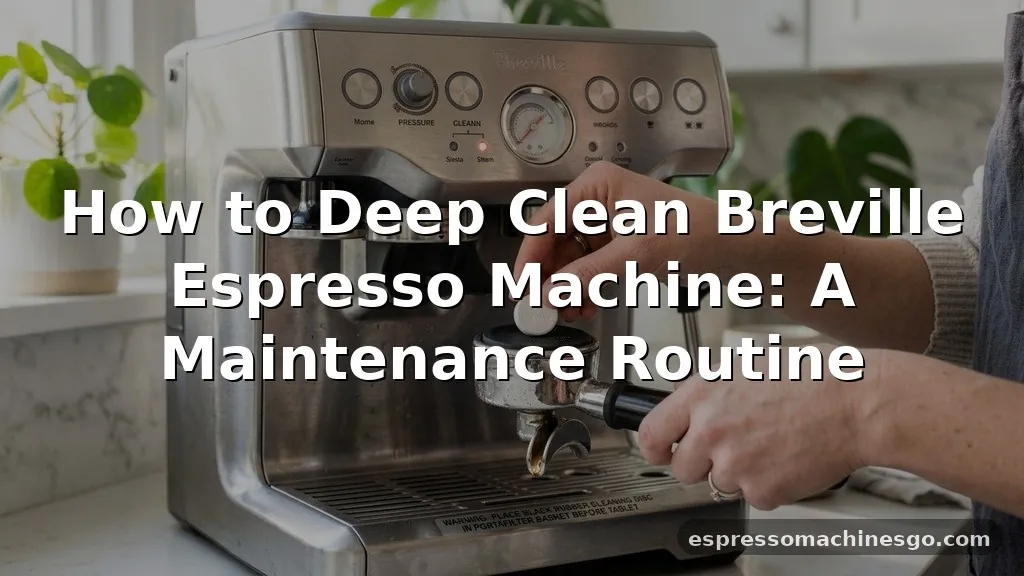
First, insert your blind filter basket into the portafilter and place one cleaning tablet inside. Lock the portafilter into the group head as if you were preparing to pull a shot.
Initiate the cleaning cycle according to your specific model’s instructions—usually by holding down the power and one-cup buttons simultaneously. The machine will run a series of short pulses, forcing the soapy water into the valve. After the cycle completes, remove the portafilter and rinse it thoroughly.
It is vital to run a second cycle using only plain water to ensure no detergent residue remains in the group head. If your machine does not have an automated cleaning program, you can manually trigger the pump for ten seconds, wait ten seconds, and repeat this process five times to achieve the same result.
Descaling the Internal Water Pathways
Descaling is the process of removing mineral deposits, commonly known as limescale, from the internal heating elements and tubing. Even if you use filtered water, mineral buildup is inevitable over months of use. If your machine is taking longer to heat up or the pump sounds louder than usual, it is time to descale.
To begin, empty the water tank and remove the water filter. Fill the tank with the recommended mixture of descaling solution and water. Place a large container under the group head and the steam wand.
Run the descaling program, which will cycle the acidic solution through all the internal pathways, dissolving the calcium carbonate. This process can take twenty to thirty minutes.
Once the solution has passed through, you must refill the tank with fresh, clean water and run a full tank of water through the system to “rinse” the descaler out completely. Neglecting this step will result in your next few coffees having a distinct, sour chemical taste.
Cleaning the Steam Wand and Milk System
The steam wand is the most common site for milk residue to harden. If left uncleaned, this hardened protein creates a breeding ground for bacteria and can eventually block the steam tip, causing a drop in pressure. The best practice is to purge the wand immediately after every use, but a deep clean requires disassembling the tip.
Use the provided cleaning tool to ensure the holes in the steam tip are clear. If you notice a stubborn blockage, soak the tip in a mixture of hot water and espresso machine cleaner for about fifteen minutes. Use the pin tool to gently poke through the holes, ensuring no debris is lodged inside.
Avoid using sharp metal objects like needles, as they can scratch the chrome plating or enlarge the holes, which will ruin your ability to create consistent microfoam. Wipe the exterior with a damp cloth and perform a final steam purge to ensure the internal channel is clear of any cleaning solution.
Troubleshooting Common Maintenance Issues
Even with the best intentions, you might run into issues during the cleaning process. Below is a comparison of common symptoms and their potential causes to help you maintain your equipment effectively.
| Symptom | Potential Cause | Recommended Action |
|---|---|---|
| Weak steam pressure | Clogged steam tip | Soak tip and clear holes with the pin tool |
| Water leaking from group | Worn group head gasket | Replace the rubber seal ring |
| Bitter, burnt taste | Old coffee oil residue | Perform a deep backflush with detergent |
| Slow flow rate | Mineral scale buildup | Run a full descaling cycle |
If you continue to experience issues after performing these steps, check your shower screen. Over time, the screen can become physically blocked by compacted grounds.
You can remove the screen using a screwdriver and scrub it with a brush. This is an easy way to restore flow if the backflushing cycle alone is not sufficient.
Filling the Topical Gaps: Advanced Care and Best Practices
Beyond the standard cleaning cycle, there are nuances to machine care that many owners overlook. One such gap is the storage of the machine. If you plan to leave your machine unused for an extended period, such as during a vacation, you should empty the water tank entirely and perform a final purge of the steam wand to prevent stagnant water from harboring mold.
Additionally, verify that your water filter is replaced every two to three months. A saturated filter stops doing its job, allowing minerals to pass directly into your boiler, which accelerates the need for descaling.
Another often missed area is the drip tray and the “empty me” sensor. Coffee grounds often spill into the tray, and if they mix with spilled water, they create a sludge that can cause odors or attract pests. Wash the drip tray regularly with warm, soapy water.
While the machine does the heavy lifting, the user is responsible for the environment in which the machine operates. Keeping the exterior wiped down and the portafilter clean of old grounds prevents cross-contamination of your fresh coffee.
By treating your espresso machine as a precision instrument rather than a kitchen appliance, you ensure that every shot you pull remains at a professional standard. Regular maintenance is not just a chore; it is an investment in the quality of your daily coffee experience.
Frequently Asked Questions
How often should I perform a deep clean on my Breville?
You should perform a detergent backflush every 200 shots or once a month, depending on usage. Descaling should be conducted every three to six months, or whenever the machine’s “descale” alert illuminates. If you live in an area with hard water, you may need to descale more frequently.
Can I use vinegar to descale my espresso machine?
It is generally recommended to avoid using white vinegar. Vinegar is highly acidic and can leave a lingering odor that is difficult to rinse out. It can also be corrosive to certain internal seals. Use a dedicated espresso machine descaling solution to protect your machine’s warranty and flavor.
What should I do if the cleaning light stays on after the cycle?
If the cleaning or descale light remains illuminated, it usually means the machine did not detect the completion of the cycle. Ensure you followed the specific sequence of button presses for your model and that you used the correct amount of water during the rinse phases to reset the sensor.
Is it necessary to remove the shower screen during a deep clean?
For a standard monthly deep clean, backflushing is sufficient. However, if you notice uneven water flow or a significant drop in pressure, removing the shower screen once or twice a year to soak and scrub it is a great way to ensure the water distribution remains perfectly balanced.