
Achieving that rich, concentrated shot of caffeine usually associated with high-end cafes is entirely possible even if you lack a traditional, expensive pump-driven appliance. Learning how to make an espresso without a machine requires a shift in perspective; instead of relying on automated barometric pressure, you must leverage manual extraction techniques to manipulate coffee grounds and hot water.
While purists might argue that true espresso requires nine bars of pressure, you can replicate the intensity, body, and flavor profile of a concentrated coffee shot using accessible tools found in most home kitchens. The secret lies in the grind size, the ratio of water to coffee, and the specific brewing method you choose to employ.
Understanding the Mechanics of Espresso Extraction
To successfully brew a concentrated beverage that mimics espresso, one must first grasp the physical requirements of the process. Espresso is defined by high-pressure extraction, which forces water through a tightly packed “puck” of finely ground coffee.
When you remove the motorized machine from the equation, you are essentially compensating for the lack of mechanical force with increased contact time or manual compression. The goal is to maximize the surface area of the coffee beans to ensure that the small amount of liquid you produce is saturated with soluble solids, oils, and aromatic compounds.
If you are attempting this at home, you must prioritize the quality of your raw materials. Because you are not using a sophisticated pump to hide imperfections, the freshness of your roast becomes the primary driver of quality. Use a burr grinder to achieve a uniform, fine texture—ideally somewhere between table salt and powdered sugar.
If your particles are too coarse, the water will pass through too quickly, resulting in a thin, sour cup. If they are too fine, you may find the resistance so great that it becomes physically impossible to push the water through your manual device. Balancing this resistance is the core challenge of manual brewing.
The Moka Pot: The Stovetop Standard for Concentration
The moka pot remains the most effective tool for mimicking the intensity of espresso without a dedicated commercial-grade unit. This device works by boiling water in the bottom chamber; as the temperature rises, the vapor pressure pushes the hot water up through a funnel containing the coffee, eventually collecting in the top reservoir. While it does not reach the nine bars of pressure found in professional systems, it provides enough force to create a heavy-bodied, syrupy beverage that serves as an excellent base for lattes or Americanos.
To get the best results, start with water that is already near boiling before you place it in the bottom chamber. This prevents the metal from heating up too much while waiting for the water to boil, which can otherwise “cook” the grounds and impart a burnt, bitter taste. Fill the filter basket level with coffee, but do not aggressively tamp it down, as the moka pot relies on steam pressure rather than manual force.
As the liquid begins to flow into the top chamber, watch closely. Once it starts to sputter or change color to a lighter yellow, remove it from the heat immediately to stop the extraction.
Using a French Press for a Robust Body
While many associate the french press with standard drip-style coffee, it is remarkably capable of producing a concentrated, espresso-like shot if you adjust your variables. The key here is to significantly increase your coffee-to-water ratio.
Instead of the standard two tablespoons per six ounces, aim for a much higher concentration. By using a fine grind and a shorter steep time, you can pull a thick, textured extract that carries the mouthfeel of a traditional shot.
To execute this, use about two to three tablespoons of very finely ground coffee for every three ounces water. Let the coffee bloom for thirty seconds with a small amount of hot water, then fill the remainder of the vessel. Stir gently, then wait for approximately two to three minutes.
When you press plunger down, do so slowly and steadily. This provides the necessary agitation to extract those deep, chocolatey notes. While you will not achieve the golden crema found in a shop, you will certainly gain the depth of flavor required to satisfy a morning craving.
The Aeropress Method for High-Pressure Simulation
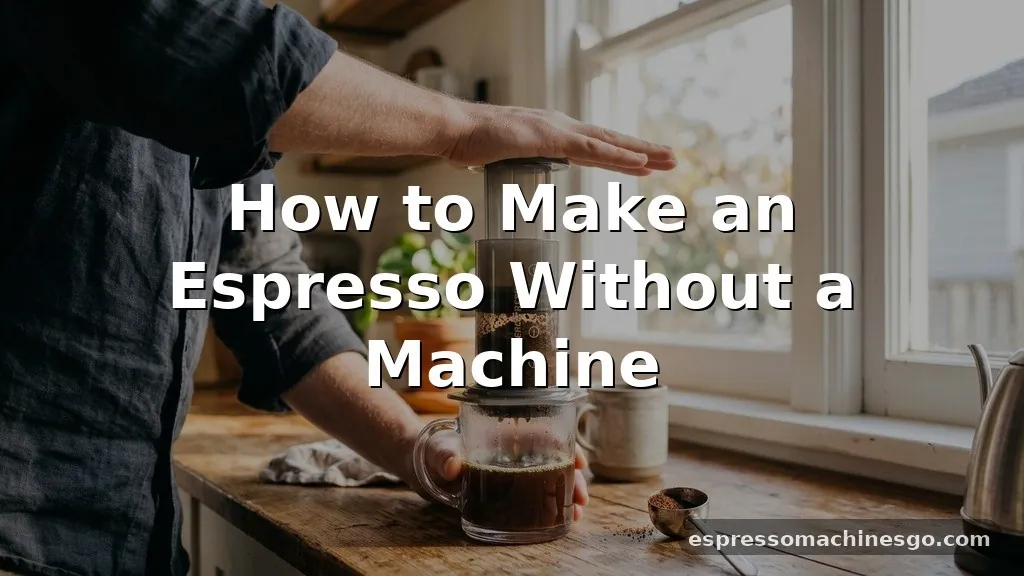
The Aeropress is perhaps the most versatile tool for those learning how to make an espresso without a machine. Because it uses a manual air-push mechanism, it allows you to exert actual physical force on the brew bed, which is the closest you can get to the mechanical extraction of an espresso maker. By using a paper filter, you ensure a clean cup, and by using the “inverted” method, you can control the steep time with surgical precision before the final plunge.
For an espresso-style brew, use a fine grind and a ratio of 1:4 (one part coffee to four parts water). After adding the water, stir for ten seconds to ensure all grounds are saturated. Place the cap with the filter on top and flip the device onto your cup.
Apply slow, consistent downward pressure for thirty seconds. The resulting liquid will be incredibly concentrated and bright, providing a clean finish that is much closer to a café-style short black than other manual methods. You can learn more about the science of extraction by reading the official brewing guidelines from the National Coffee Association to refine your technique further.
Comparison of Manual Brewing Methods
Choosing the right approach depends on the equipment you have available and your preference for body versus clarity. The following table highlights the differences between the most common manual techniques used to simulate espresso.
| Method | Primary Strength | Texture | Effort Level |
|---|---|---|---|
| Moka Pot | High Pressure/Heat | Syrupy and Bold | Moderate |
| Aeropress | Manual Force | Clean and Intense | High |
| French Press | Immersion | Full-bodied/Oily | Low |
Addressing Topical Gaps: Troubleshooting Common Issues
Many home brewers struggle when transitioning away from automated espresso makers because they lack the feedback loops that machines provide. One common issue is the “crema” problem. It is important to note that true, stable crema is a byproduct of high-pressure CO2 release.
In a manual setup, you might see a “faux-crema” which is essentially just fine bubbles, but it will dissipate quickly. If you find your coffee is consistently bitter, your grind is likely too fine or your water is too hot. Conversely, if the drink tastes watery or sour, you need to grind finer or increase the amount of coffee used.
Another gap often overlooked is the temperature of the vessel. If you pour your concentrated shot into a cold ceramic cup, the temperature drop will immediately mute the delicate flavor notes. Always preheat your cup with boiling water before you begin the brewing process.
Additionally, the quality of your water plays a massive role. Since espresso is mostly water, using filtered or bottled water rather than tap water can be the difference between a muddy, metallic-tasting shot and a vibrant, professional-grade extract. Never underestimate the impact of water chemistry on the final cup.
Refining the Final Product
Once you have mastered the extraction, the way you enjoy your manual espresso is entirely up to you. If the concentration is too intense for a straight shot, you can add hot water to create an Americano, or steam some milk in a separate jar and shake it vigorously to create a micro-foam for a makeshift latte.
The beauty of these manual methods is the intimacy they foster with the coffee-making ritual. You are no longer just pressing a button; you are actively engaging with the variables that define the quality of the beverage.
Take the time to experiment with different origins of coffee. A light roast will yield brighter, more acidic espresso notes, while a dark, oily roast will provide that classic, heavy-bodied experience that pairs perfectly with milk. Record your results—note the grind setting, the weight of the coffee, and the time taken to brew.
Over time, you will develop an intuition for the process that no automated machine can replicate. By mastering these manual techniques, you gain the freedom to craft a high-quality coffee experience anywhere, regardless of your access to professional-grade hardware.
FAQ: Common Questions on Manual Espresso
Can you actually get crema without a machine?
True crema is a pressurized emulsion of oils and CO2 that requires nine bars of pressure. Manual methods like the Moka pot or Aeropress produce a foam layer, but it is not technically crema. It will look similar, but the texture and stability will differ from café-standard espresso.
How do I make espresso with regular coffee grounds?
You can use regular coffee, but the grind size is the limiting factor. If your grounds are too coarse, the water will pass through without extracting enough flavor. To get a decent result, use a higher ratio of coffee to water and extend the steep time to compensate for the coarser grind.
What is the easiest way to make espresso at home?
The Moka pot is widely considered the easiest method because it requires minimal active effort. Once you set it on the stove, the physics of the device handle the pressure and extraction for you, provided you watch the temperature to avoid over-extracting the grounds.
Is it possible to use a standard drip coffee maker?
A standard drip machine cannot produce espresso because it lacks the necessary pressure and temperature control. You can use it to make a very strong, concentrated brew by using more coffee and less water, but it will lack the characteristic intensity, mouthfeel, and complexity of a real espresso shot.